
Fly-tipping in Nottinghamshire increases by 43 per cent in a year
Fly-tipping in Nottinghamshire has increased by over 40 per cent in one year - but the council says incidences reported by citizens have decreased
The most recent Government statistics show a sharp spike in fly-tipping across the city from 2023 to 2024.
Fly-tipping is the illegal dumping of liquid or solid waste onto land or into water and is a criminal offence.
In the 12 months to April 2019 there were 7,864 incidents of fly-tipping, increasing to 21,298 in 2023 – a 170 per cent increase over five years in the city.
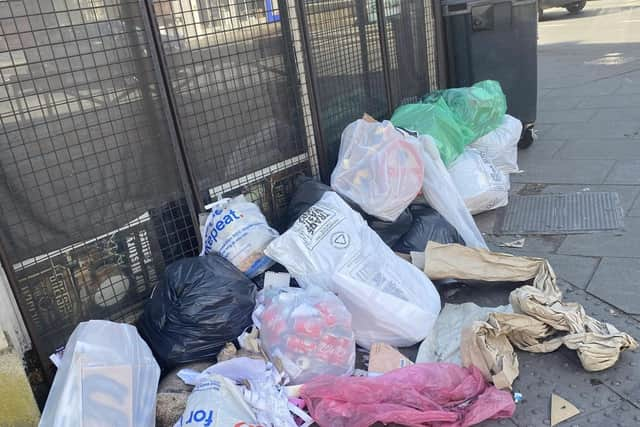

In 2024 there were 30,511 incidents – a 43 per cent rise in a single year.
Despite this, Nottingham City Council says the number of fly-tipping reports made by residents has actually gone down – and better reporting processes used by staff has contributed to the increase.
In 2024, 7,326 fly-tipping reports came directly from residents via the council’s ‘Report It’ system, compared with 8,466 in 2023 – a reduction of more than 1,000.
The authority’s most recent data showed 6,757 reports for 2025, showing a further decrease from 2023.
Coun Corall Jenkins, executive member for Neighbourhoods, Waste and Equalities, said in a statement: “We recognise the impact that fly-tipping has on our neighbourhoods and understand how frustrating it is for residents. However, it’s important to be clear that fly-tipping is always the responsibility of the perpetrator.
“It’s a selfish act which blights communities and diverts our already-busy cleaning crews from carrying out their wider work of keeping Nottingham clean and tidy.
“The council has improved its reporting processes employees collect pro-actively. Our officers are also benchmarking our reporting through WasteDataFlow which is in line with best practice across other councils. These improvements help us better target our enforcement officers to the areas that need the most attention.”
The council says its Neighbourhood Safety Officers work closely with residents and businesses on waste, issue Fixed Penalty Notice fines along with targeted clean-up operations and using CCTV as a deterrence.
Outside of the city boundary, Mansfield saw the greatest improvement in incidences in one year.
In 2023 there were 2,252 incidences of fly-tipping in this district, but this dropped to 1,843 in 2024 – a 18.2 per cent fall.
A spokesperson for Mansfield District Council said: “Over the past year, we’ve made strategic use of technology, including the Whitespace system, to optimise our waste collection routes and improve response times. By removing waste more quickly, we reduce the risk of repeat dumping in the same area.
“We’ve also analysed Fly Capture data to identify fly-tipping ‘hot spots’, and the types of materials commonly dumped. This allows us to carry out targeted collections and interventions, making our approach more proactive and data driven.
“In addition, we’ve worked closely with our Community Safety team to focus on problem areas, combining enforcement with education and community engagement. As a result, our response times have improved and we’ve been able to take quicker, more effective action.
“We know there’s still more to do, but these early results show that targeted, collaborative work can make a real difference in reducing environmental crime in our communities.”
Nottingham residents can report fly-tipping in their local areas at myaccount.nottinghamcity.gov.uk/service/report_fly_tipping_or_litter.