
Trade body calls on Mansfield and Ashfield gardeners to be vigilant with hedging choices


As the UK enters the hedge planting season, a national trade body is urging gardeners in Mansfield and Ashfield to avoid choosing invasive species that can spread into the wild with some top tips.
Experts at the Property Care Association (PCA) say invasive plants that are not native to the UK are gaining ground across the country and taking their toll on the natural environment.
Daniel Docking, the PCA’s invasive weed control technical manager, says two species, Cherry laurel and Japanese rose, are of particular concern.
While both plants are attractive fast growing ‘ornamental’ species popular in landscaping projects, their ability to spread rapidly can have a damaging impact.

Danel said: “Our advice to gardeners is to be particularly careful about the plants they choose for landscaping projects as the UK enters the traditional hedging season.
“Invasive species such as Japanese knotweed and Giant Hogweed are regularly in the headlines, but PCA members’ work embraces all aspects of invasive non-native plant control, and we are concerned about the impact of Cherry laurel and Japanese rose.”
Cherry laurel has adapted well to the varied climate in the UK and is a challenging species to tackle if it escapes into woodland or native habitats.
It forms dense thickets and if left unchecked can outcompete native vegetation, disrupting ecosystems and impacting biodiversity.
It also has remarkable shade tolerance, and its evergreen foliage contains cyanogenic glycosides, which make it unpalatable to livestock and many invertebrates, allowing it to proliferate.
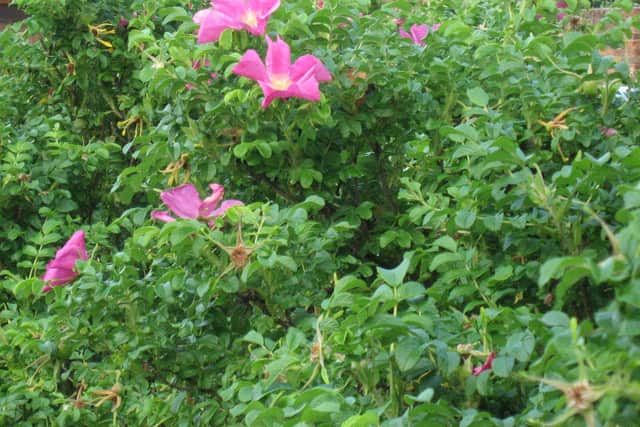
Japanese rose can adapt to a spectrum of environmental conditions and, like Cherry laurel, forms dense thickets.
It grows rapidly – relying on birds and mammals to distribute its seeds – is resistant to pests and diseases and can displace indigenous plant species as well as attracting pollinators with its showy flowers.
Altering the floral composition can have cascading effects on the entire ecosystem, affecting the availability of food and habitat for various species.
Gardeners can find out more about invasive weed control on the PCA’s free online information area at https://www.property-care.org/professionals/guidance/invasive-weeds/species-list
Daniel added: “Gardeners can play an active role in controlling the spread of these plants and other invasive non-native species.
“Our advice is to seek expert advice and choose plants that are not going to overpower and dominate their natural surroundings.”