
Nottingham saving lives with new mental health and substance use treatment model
A pioneering treatment model in Nottingham helping people with mental health and substance use needs has been praised, after a visit by a top government drugs Czar.
Dame Carol Black came to Nottingham to see how a joined-up approach is making a real difference to supporting people with co-occurring needs.
Now there are plans to roll out the model more widely.
In the past, people have been pushed away from mental health services until their substance use issue was 'fixed', leaving many without access to urgently needed treatment.

With one-in-five people in mental health services experiencing substance use issues and as many as 70 per cent of people in substance use treatment nationally thought to have an unmet mental health need, a new approach was desperately required.
Nottingham has also been identified as having some of the highest needs in the UK.
Nottinghamshire Healthcare NHS Trust, Nottingham Recovery Network (NRN) and Change Grow Live (CGL) are working together to offer a joined up treatment pathway and seeing real success with people in treatment who have previously been missed by traditional drug and alcohol treatment services.
One of the aims of the pathway is to identify these hidden mental health issues in substance use cohorts.
As a result of the new pathway, 247 people in the last year have been referred for drug and alcohol treatment who usually wouldn't be considered, following assessments by psychiatric hospital liaison teams, crisis workers and local mental health teams.
The services now support each other across different areas of expertise to deliver better outcomes for people.
One service user, who wanted to remain anonymous, explained why the new joined up approach is so important.
They said: “My mental health has been a consistent issue throughout my life and I’m still waiting for further diagnoses as well.
"It can feel like services focus so much on the substance use that other mental health needs get overlooked, even though they’re still very much present.
“When I speak to recovery staff, I feel understood and like there’s a shared perspective.
"Those appointments feel more useful and meaningful.
"I find it baffling that it seems like I’m expected to deal with my substance use first, and only after being sober for a certain period will other mental health issues be properly addressed.
"But those issues don’t disappear just because I’m not using.
“I know that even if I stay sober long-term, I’ll still experience triggers and difficulties.
"It doesn’t make sense to separate mental health and substance use services when they’re so closely linked.”
Nottinghamshire Healthcare has been a proud partner in the NRN since its inception, recognising the importance of providing treatment pathways for people experiencing co-occurring substance use and mental illness.
Dr John Barker, clinical director for the trust’s substance use services, said: “We were delighted to welcome Dame Carol Black and Dr Adrian James.
"Their interest reflects the hard work and dedication of our clinical staff, and the strength of the wider system working with key partners within NRN and CGL, to provide treatment pathways for this patient group.”
Megan Russell, team leader, mental health pathways at CGL, said: "These new ways of partnership working allowed those people who fall through the nets to access support for mental health and substance use at the same time.
"It allows flexibility, understanding and a person centred approach.
"It has also been great to build stronger partnerships; not only between mental health services but also between CGL and NRN."
NRN now has trained talking therapists in substance use as well as a dedicated drug and alcohol grief service to support people using substances due to grief, or those who have lost a loved one to substance use.
Dame Carol said: “We wanted to come to Nottingham because there is a real attempt to join the services and make them work together
"And it's good to see where people are really trying to do what you want done.”
Apollos Clifton-Brown, director of health and social care at the homelessness charity Framework, added: “We needed to do things differently, we have, it has worked and we’re still building on that.
“We were delighted to welcome Dame Carol Black to Nottingham and showcase the progress we’ve made through strong, long-standing partnerships.
"Our joined-up approach has been built on trust, shared learning and a commitment to working across traditional boundaries to achieve better outcomes.
“The visit from experts in the field is a real endorsement of the work happening in Nottingham.
"It not only recognises the progress made here but also helps pave the way for similar models to be developed in areas such as Lincolnshire and North East Lincolnshire, where we are now taking forward what we’ve learned.”
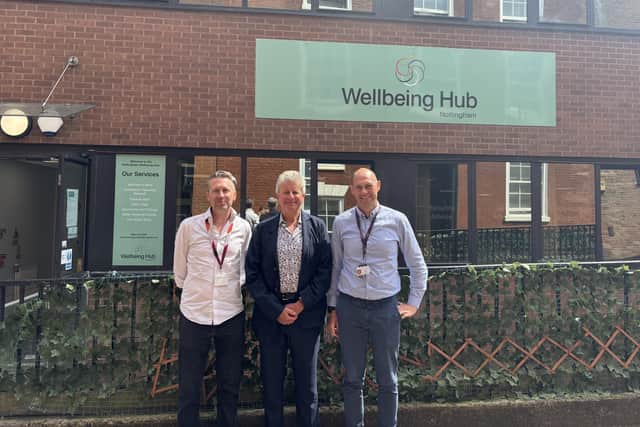
Dr Adrian James, NHS England medical director for mental health and neurodiversity, accompanied Dame Black on the visit to the wellbeing hub, the ‘all under one roof’ service in Nottingham city centre.
For anyone experiencing issues with substance use or mental health, support is available.
Nottingham Recovery Network helps people make changes to their relationship with drugs and/or alcohol, and provides support for families and carers of those affected by substance use.
Wellness in Mind offers free, same-day mental health support for anyone struggling with their thoughts, feelings, low mood, or anxiety.
Both services can be accessed through their drop-in sessions at the Wellbeing Hub, 73 Hounds Gate, Nottingham, NG1 6BB, Monday to Saturday.