
Beaver Supermoon over Sutton on Bonfire Night
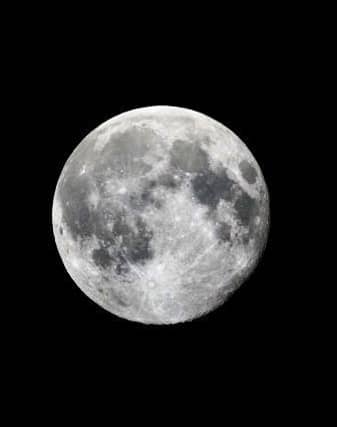

Last night's full moon was a special one - a Beaver supermoon.
Local photographer Paul Horton looked to the sky over Sutton in Ashfield near the Sherwood Observatory on Bonfire night but not for fireworks.
It was the second of three consecutive supermoons this year, after Hunter's moon in October and Cold moon which is expected in December.
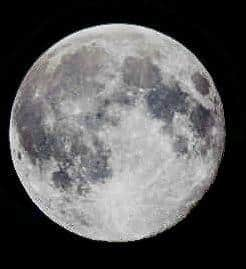
Supermoons occur when a full moon is closest to the Earth in its orbit, meaning it appears larger and brighter than other full moons.
This is because the moon's orbit around the Earth is not perfectly circular.
As it completes its 27-day cycle around the Earth in a more oval shape, there is a point where the moon is closest to the Earth, known as the perigee.
This is called a supermoon because it looks bigger in size compared to other full moons. When the moon is furthest away that is known as the apogee.
The Earth usually sees one full moon a month, at stage five of the lunar cycle. However, as the calendar months are longer, it is possible to see multiple full moons in a month. This is called a blue moon.
Each month's full moon has a name. For example, March has the Worm moon and June has the Strawberry moon.
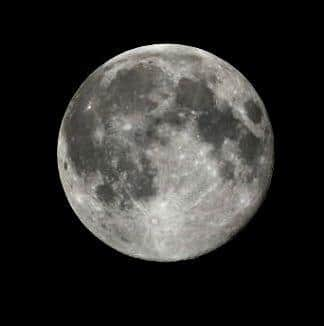
November's full moon is called the Beaver moon, making this one a Beaver supermoon.
The Royal Greenwich Museum says there is speculation about the origin of the name, but it may be due to November being the time of year when beavers are busy building their dams for winter.