
Dad's Army in Mansfield: Meet the men behind the hit 'radio show' coming to town
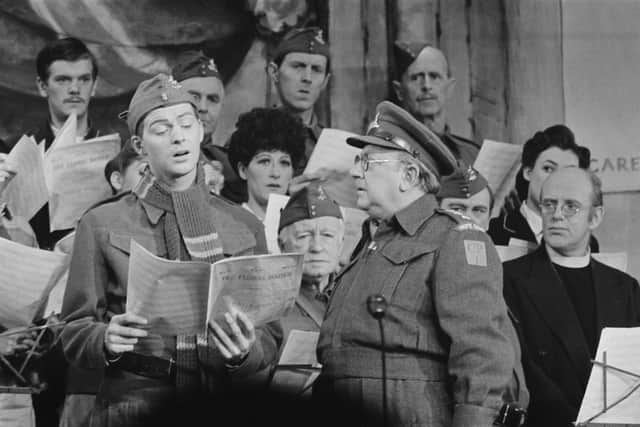
The spirit and sounds of Dad’s Army will come to life in Mansfield next month – with just two performers playing more than 25 characters.
Dad’s Army Radio Show celebrates the BBC comedy, with three episodes enacted on stage - complete with sound effects, vintage music and all those favourite catchphrases.
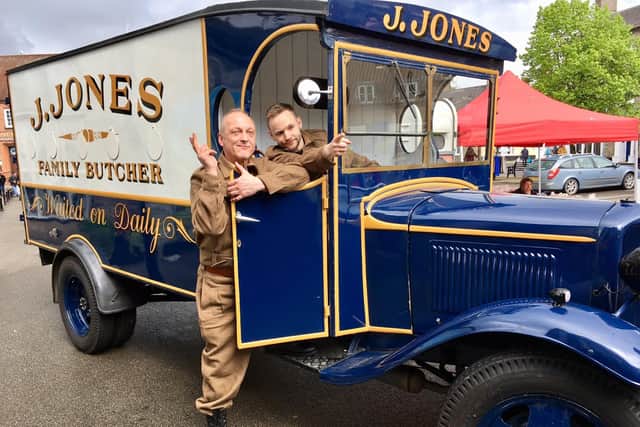

The show comes to the Palace Theatre on June 4 – and as they headed out on tour, master performers Jack Lane and David Benson spoke about their love for the beloved sitcom, and why its appeal has endured for more than 50 years.
Which of the main characters do you each play?
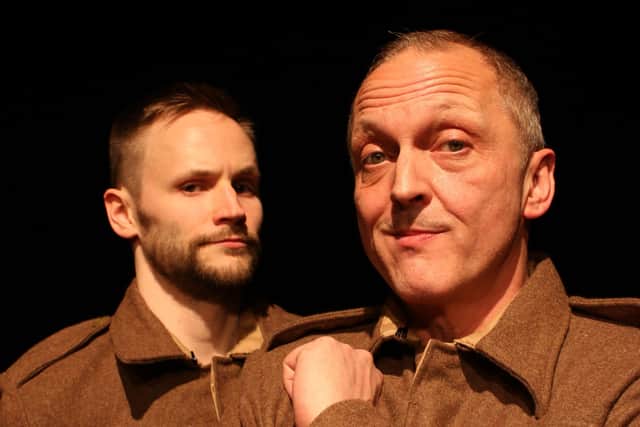
JACK LANE: I play Mainwaring, Jones, Pike and other incidental characters.
DAVID BENSON: An assortment of platoon regulars: Wilson, Frazer, Godfrey, Walker. I also get to play some of the less-frequently seen but equally loved stalwarts like The Vicar, The Verger, Hodges and Mrs. Fox.
Do you always play the same characters or do you swap them between you?
JACK: We always play the same characters; this was something we played with in rehearsal. We both said which ones we most favour and it transpired that Mainwaring, Jones and Pike actually have a large share of the dialogue, which is why I generally stick with that trio and David looks after Wilson and the remaining members of the platoon including additional guest spots such as the German U-boat captain.
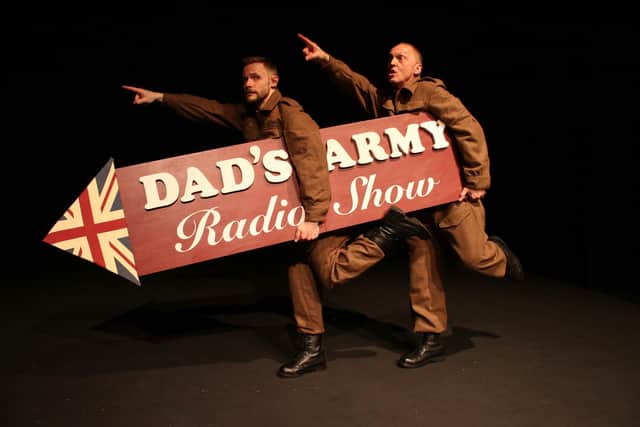
DAVID: I think either of us could play any of the characters if we wanted to swap but we like it the way it is. In some of the earliest rehearsals we took turns playing each character – me as Mainwaring, Jack as Walker – but it soon became clear who was going to be who.
Who's your favourite character to play and why?
JACK: Captain Mainwaring. He’s a tricky voice to get right but Arthur Lowe’s timing is second to none, my main objective is to nail that. I love playing the class distinction stuff with him, something that’s still alive and well in this country. His exasperated reactions to Jones and lofty responses to Wilson are heaven for any actor. I have a great deal of fun with them.
DAVID: I love playing Sergeant Wilson – which means playing John Le Mesurier, of course: utterly charming and elegant in his self-characterisation. I used to impersonate Le Mesurier when I was a Birmingham schoolboy, not for the entertainment of others but for my own secret pleasure. It calmed me down, to pretend I was Sergeant Wilson, who seemed to float airily above even the most fraught situation. He was in fact a very anxious man behind the far-away smile which is maybe why, in adult life, I find his Dad’s Army character still fits me like a glove.
Do any pose you particular problems?
JACK: The only problem is the sheer speed of changes in tone, body language and character but it’s all about breath control and vocal choreography. Once you’ve mastered that you can happily have a conversation with yourself as two or even three characters.
DAVID: Godfrey is a very tricky voice to get right because it is as airy and flaky as Dolly’s puff pastry. When the line before might have been in Frazer’s ferocious brogue or Hodges’ menacing bark, it can be a little difficult to adjust to Godfrey’s frail and faltering delivery.
Growing up were you fans of the original TV series?
JACK: I was a huge fan! Listening to the cassettes of the radio series at age eight, I would fall asleep to them so those characters and their rhythms are burnt into my memory. I wore out my VHS copies. I knew it line for line so the job was half done when the opportunity of playing them came up!
DAVID: I remember the words ‘Dad’s Army’ being spoken by a schoolfriend when I was seven and I wanted to know what it was as it sounded very interesting. So, I must have been watching it from the age of seven which means I saw it from the second series onwards. It is deeply entrenched in my life and I, like most of the nation, adore it and somehow believe that it was all done especially for me.
How do the radio scripts differ - if at all - from the TV show?
DAVID: The brilliant adaptations of the telly scripts by Harold Snoad and Michael Knowles for Radio 4 sometimes left out exchanges, one-liners and even whole scenes. On comparing the published Dad’s Army scripts with the broadcast versions – which often differ in phrasing, deleted lines – against the radio transcripts we made (essentially three different versions of each episode) – we spent a lot of time trying all the versions out, and then line-by-line selecting the best of each to come up with our own versions for performance.
JACK: They differ greatly at times, depending on how visual the TV episode had been. Some dialogue was clearly removed for running time issues, as the narrative on radio has to allow for more descriptive dialogue to be added. We’ve replaced many original lines from TV episodes simply because they were too funny to lose.
A lot of the Dad's Army comedy came from visual gags, with machinery and weaponry going wrong. How do you get that across in this show?
DAVID: All the highly visual elements of our chosen episodes – whether it is Mainwaring and Jones being swept across the countryside attached to a barrage balloon and pursued by the platoon in Jones’ van, or the appearance of a vintage steam fire engine, or Jones’ Lewis gun ripping a piece out of the Vicar’s Hall – all this can be done with words, sound effects and the audience’s vivid imagination.
JACK: Sound effects and the audience’s imagination, for which there is no limit. We always say that we bring the voices and the audience brings the set.
Have you met any of the original cast - and if so what do they think of your show?
DAVID: I have over the years been privileged to meet many Dad’s Army cast and creatives, though many have left us in recent years: Clive Dunn, at his house in Portugal, Pamela Cundell, Ian Lavender (we were in an episode of Goodnight Sweetheart together), Philip Madoc on his last recording session, Frank Williams, Bill Pertwee, and Jimmy Perry and David Croft themselves, a true honour.
JACK: We met Harold Snoad and Michael Knowles, who adapted the episodes for radio; Michael also appeared in several episodes. It was a huge privilege for us to have them in the audience at Richmond Theatre and much to our relief they enjoyed it.
Does it have the blessing of the BBC and the original writers?
DAVID: The show has been blessed by the original radio script creators Harold Snoad and Michael Knowles, who came to see the show at Richmond Theatre. Harold was a senior creative on Dad’s Army from its outset and Michael was a frequent guest actor – I actually impersonate him in two of the episodes.
You've met quite a few surviving relatives of the original cast - what have they said to you?
DAVID: I have a very good friend in Joan Le Mesurier, John’s widow, who has seen the show twice and given it her full blessing. We were very pleased to have the family of David Croft at a recent show, including all his children, who gave us their enthusiastic approval for our work!
Dad's Army is still loved by millions - what do you think is its enduring appeal?
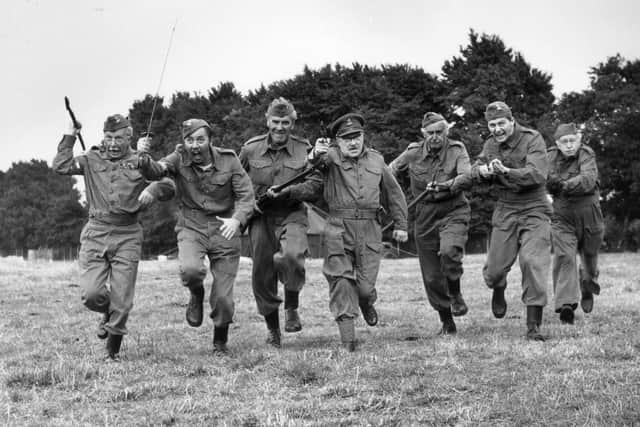
JACK: Character-led comedies on TV are almost non-existent now. The characters in Dad’s Army endure. They all feel so real because such superb actors played them. Perry and Croft knew how to write them, how to keep their core personality no matter what situation they’re put in, which is where most of the comedy often derives. That’s not easy to do unless you have the perfect mix of quality writers and actors and quality always endures.
DAVID: The enduring success of Dad’s Army is not only in its exciting situation of Britain facing an existential threat, in its delightful characterisation and conflicts of personality, but because, rarely amongst popular comedy shows of the era, it offends no-one. It has been watched by families together for generations and will always evoke this feeling of comfort and shared family pleasure for those lucky enough to experience it.
What age group does your show appeal to and attract?
DAVID: Dad’s Army seems to be totally universal in its appeal. We have many elderly people coming to see us, who feel included and connected to our work, and very young people indeed. Our youngest fan is aged eight and is obsessed with the television Dad’s Army and with our show, which she has made her mother bring her to twice. We had one wonderful matinee, at the gorgeous Theatre Royal Bury St Edmunds, when half the audience was a large party of very elderly people from a local care-home and the rest were 15-year-old drama students on an outing. They all seemed to be equally engaged and the theatre rocked with their combined laughter.
What's your favourite Dad’s Army episode?
DAVID: I like the episodes with real emotional undertow: Branded, where Godfrey confesses to having been a Conscientious Objector; A Wilson – Manager, where Wilson becomes manager of a rival branch; and of course Mum’s Army, in which Mainwaring has a ‘Brief Encounter’ moment. The Deadly Attachment is the all-time great episode. It’s got everything: a tense situation, great character banter and best of all: Germans!
Visit mansfield.gov.uk/palacetheatre or call 01623 463133 to book.