
EcoFlow Stream review: This DIY solar system is actually cutting my bills


This article contains affiliate links. We may earn a small commission on items purchased through this article, but that does not affect our editorial judgement.
DIY solar could save you serious money, and EcoFlow’s Stream series is on a Black Friday sale - our consumer tech expert puts it to the test in his own house
Installing solar panels on your house might be a great way to harvest free energy from the sun, but it can be fantastically expensive.
I'm something of a heavy consumer when it comes to electricity. My house is filled with gadgets and I charge up an electric car every week. So I'd love to drape my roof with photovoltaics, but I simply can't afford to.
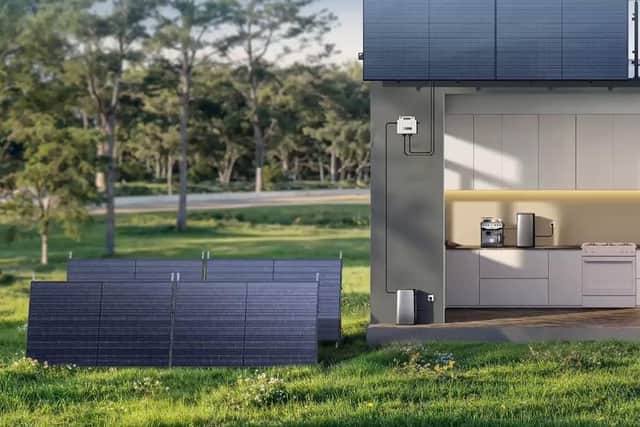
However, there is a way to set up a small solar system without spending megabucks. Balcony solar is a thing now, and it's basically a DIY install. You just need some space for the panels, and to wire it in to your home's circuit board.
One of the market leaders in this field is EcoFlow, which offers a range of small-scale solar solutions, from the panels to the batteries and microinverters.
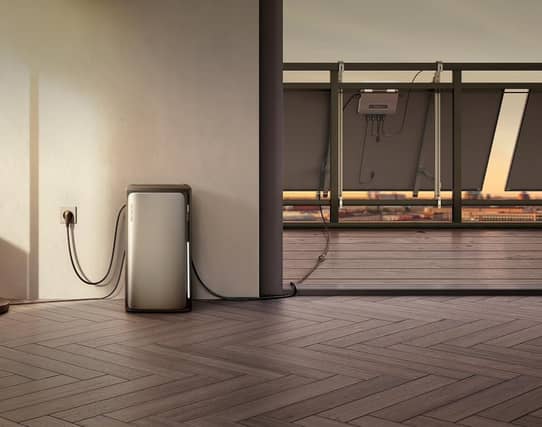
Recently EcoFlow has launched its new Stream series, which bundles all the technology you need into one neat unit - and a full setup can be had for a lot less than £2,000 thanks to a Black Friday sale. You can even buy refurbished units for just over £500, and then source your own solar panels.
Either way, it's a much more palatable price than the thousands and thousands of pounds you could spend on roof-mounted solar panels - and, obviously, I had to put it to the test.
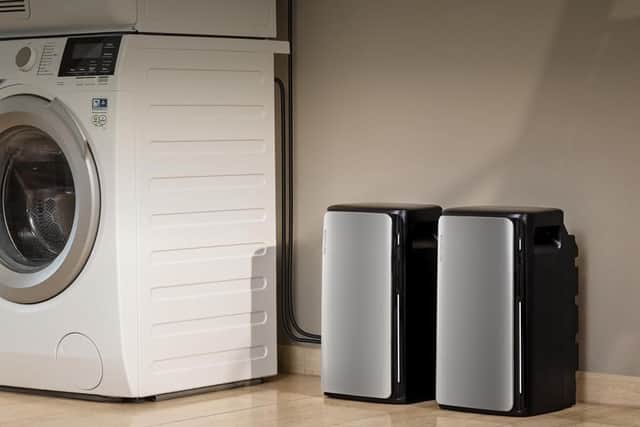
EcoFlow sent me out a couple of their 450w solar panels, and a Stream Ultra unit, and a Stream AC Pro unit.
These boxes, about a third of the size of a fridge, connect up to your household mains and regulate the solar power, at the same time as storing your excess energy in a battery.
And, here's the clever bit, an AI-driven system then monitors the amount of electricity you're using, and carefully balances the amount of power going into the battery with the amount that's coming out, covering your house's load when possible.
.jpeg?crop=3:2,smart&trim=&width=640&quality=65)
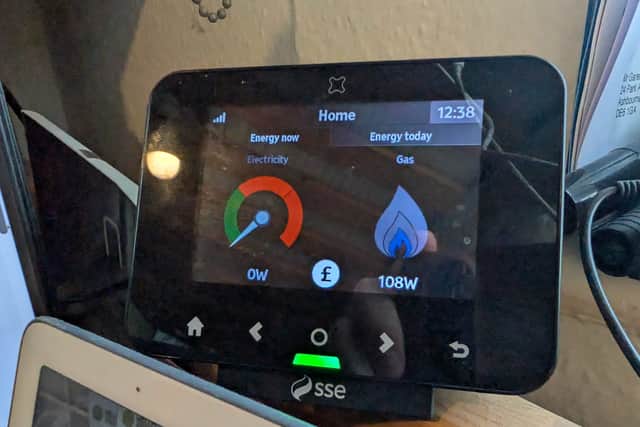
What this means in practical terms, for me at least, is I've been able to watch my smart meter drop to zero watts for large swathes of the day. Even on a fairly cloudy day. And that is hugely satisfying.
Because the batteries bank up solar, you can choose to fill them up while the sun's out, and then live off them for as long as they last when the sun sets. Or you can just let the AI get on with it and let it work it all out for you. It's incredibly clever.
In terms of saving money, I'm obviously going to be paying less on my electricity bills, given I'm not using any grid power for chunks of the day and, although it's a bit of a rubbish time of year now to be harvesting sunlight, I've already reduced my monthly payments, and I'm expecting to do that again when the warmer months roll in.
The great thing about the EcoFlow app is it gives you such a comprehensive amount of information. From a live feed telling you how much solar power you're generating, to a rolling daily amount of money earned, you've got it all there on the screen, and you can watch the AI in action, working it all out.
Combining EcoFlow's two solar panels with two slightly smaller ones I'd already owned means I have around 2Kw on the roof of my conservatory. And, on a sunny day, I can generate enough to save me at least a couple of pounds. On sunny days in the winter, it's closer to 50p, but I'm looking forward to the summer when I should be seeing quite a few quid rack up on a good day.
You've probably worked out already that, even in a good year, and even with the current Black Friday savings, it would take a while to recoup the investment. For example, a really good starter setup, the EcoFlow Stream Ultra X with four huge panels, will cost you £1,649 at the moment. EcoFlow's website promises you could save up to £1,734 annually on your electricity bills, but there are a few obvious caveats.
Firstly, that's assuming you set the panels up at the perfect angle, and that's not always possible. Mine aren't quite right, and if you hang them from a fence or balcony, they won't be right, either.
Also, you're reliant on the British weather. I set my system up just at the tail end of a gorgeous summer, but it hasn't been all that lovely just recently. On cloudy, wet days I will earn a few pence, at best. If we get another horrible summer, you'll have issues making your money back.
There's also some other potential costs to consider. EcoFlow markets these systems as DIY, but I did call in an electrician to wire mine into the household supply. I think he charged me about £60 for that.
It's also worth buying a smart meter, which wires into your circuit board and tells the AI exactly how much you're using. This helps it accurately divide up the power, and it'll save you more in the long run - but it's another possible outlay.
While you can install the panels however you like, you might also need to invest in some stands or fixings, and although the cables that come with the Stream devices are pretty long, you might need to budget for extensions. And they're not cheap.
But once you're up and running, it's a fabulous system. Watching your solar output becomes very addictive, and you'll never tire of seeing 0W displayed on your smart meter, knowing that everything you're using in your home is being powered by the sun.
For most people, this won't be enough to go "off-grid", it's not designed for that, but it lightens the load and reduces your reliance on the grid. You also can't feed in to the grid and get paid, because energy companies don't recognise this sort of system.
But it does save money. And in the long run it will pay for itself. If you've got the space to set one of these up, and the time to lose gazing at the addictive solar input on the app, you really should invest in one. And make sure you catch the Black Friday sale. The savings are terrific.