
Full list of council tax changes for Mansfield, Ashfield, Broxtowe and Bassetlaw
Has your council tax been frozen or has it gone up?
Councils and authorities such as the fire service and police have now decided how much their portion of tax bills will be going up – or freezing – from April 2026.
In Nottingham, the city council delivers all services for residents as a unitary authority, and charges tax to do so.
Alongside the council, the Nottinghamshire Police and Crime Commissioner (NPCC) charges a precept for police work, and the Nottinghamshire Fire Authority (NFA) charges a fee for the fire service.
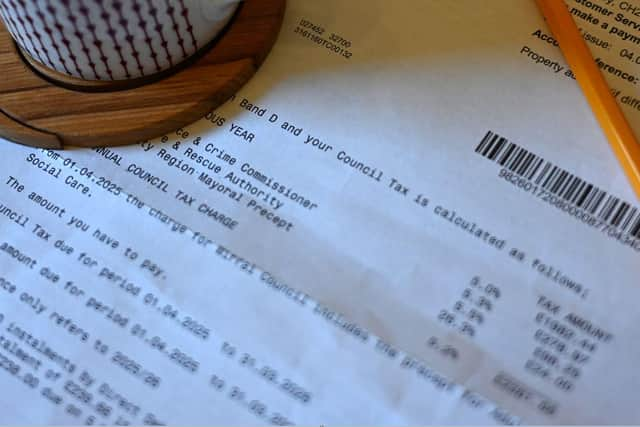

In Nottinghamshire, a two-tier council system operates.
Nottinghamshire County Council delivers some services, while several borough and district councils deliver the rest.
In the wider county, residents’ tax bills therefore have several different elements, including the police and fire precepts, and some even have an additional tax charged by parish councils.
Both the city and county can put tax up by a maximum 4.99 per cent without a referendum – because they deliver costly adult and children’s social services – while the boroughs and districts can put theirs up by a maximum of 2.99 per cent.
Below is a breakdown of how much each authority will be charging from April:
Nottingham
Council tax in Nottingham will be going up by 3.5 per cent.
This raises council tax for a band D property to £2,342.08, an increase of £79.20 from 2025-26.
The Labour-led city council has been increasing council tax by the maximum allowed amount of 4.99 per cent since 2008, meaning the rise from April is the lowest in 18 years.
Nottinghamshire
The Reform-led county council has decided to put its portion of council tax up by 3.99 per cent.
The 3.99 per cent rise in the council’s share of council tax bills means households will pay on average an extra £1.24 a week.
The rise is less than last year, when the Conservatives raised tax by 4.84 per cent.
Mansfield
Mansfield Council has approved its 2026/27 Band D council tax at £212.72, following a 2.99 per cent rise – the maximum allowed amount.
Ashfield
Ashfield Council has agreed to increase council tax by just below the maximum allowed amount at 2.93 per cent.
It means a band D household will pay £213.20 a year from April.
Bassetlaw
Council tax charged by Bassetlaw Council will be going up by 2.99 per cent.
Last year, a band D homeowner paid 205.90, from April, they will pay 212.05.
Broxtowe
Broxtowe Alliance-led Broxtowe Council has increased its share of tax by 2.94 per cent, which for a band D home, is an extra £5.68 a year.
The average Band D home owner will see their bill rise from £192.93 to £198.61 from April.
Newark & Sherwood
Newark &Sherwood Council has agreed to freeze council tax in the district for the first time in a number of years.
The tax bill for a band D property will be £198.60 per year.
Gedling
A council tax increase of 2.998 per cent has been approved by Gedling Borough Council’s Labour administration.
This equates to an additional £5.82 per year in Gedling’s share of council tax, based on a Band D property.
It means residents in this band will be paying £200.32 for the year from April.
Rushcliffe
Residents in Rushcliffe will not have to pay a higher rate of council tax after councillors also agreed to freeze the figure.
Rushcliffe Council will maintain its portion of council tax at £161.77 for the 2026/27 financial year for a Band D property.
Nottinghamshire Police and Crime Commissioner
NPCC Gary Godden, has settled on a 5.1 per cent increase on the precept for policing, which forms a part of residents’ council tax bills.
This will mean residents living in a band D property could have the amount they pay on their policing precept go up by £15 – £296.10 to £311.10 for the year – from April.
Nottinghamshire Fire and Rescue
The NFA has approved a £5 increase in Nottinghamshire Fire & Rescue Service’s share of the local council tax precept for the average band D property.
The average band D property owner currently pays £97.21 per year towards the fire service, but from April, this will rise to £102.21 per year.
This is equivalent to around 10p per week.