
‘I think it’ll happen again’: Life next to Mansfield cliff that collapsed in landslide
The 30-odd homes that face onto the slope of the old Berry Hill Quarry in Mansfield are arranged in a perfect L-shape.
As you drive down a hill onto the estate, the trees at the top of the bank provide a picturesque backdrop to the neat three-storey homes below.
But many of those homes are empty now, says mum Jade Smith, who lives opposite.
She’s lived here for nine years and was in the house on November 4, 2019, when torrential rain caused the slope to collapse and sent mud, rocks and even the trees cascading into the gardens below.
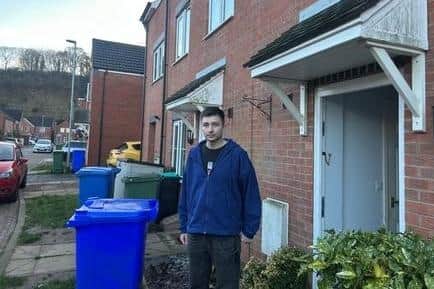

“There was just screaming,” recalls the 33-year-old.
“Somebody had lost their cat, people were running to move their cars out of the car park, there was lots of shouting.”
The landslide that day resulted in 32 homes and 60 residents being evacuated by Mansfield Council, some for two weeks, while an emergency clean-up operation took place.
But work to secure the cliff face from slipping again did not start until March 2021.
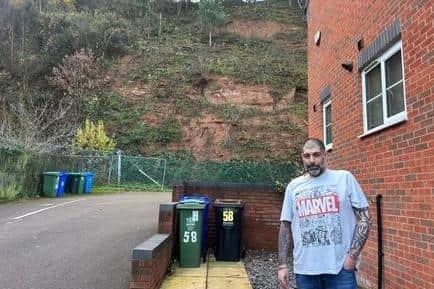
In the meantime, two further landslides occurred.
Fencing and netting were fixed to the vertical wall over an 18-month period to finally make the road safe to live on.
But now – six years later – the council is now spending another £600,000 on stabilisation works.
And some residents are only just learning about this.
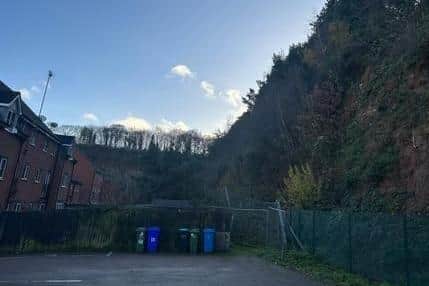
Joshua Whitmore, aged 35, who lives in one of the houses backing onto the slope with his wife and young daughter, is one of them.
The family bought their house, on Stone Bank, in 2015 and were out at a restaurant when the landslide happened.
He said: “I got a call saying we were being evacuated indefinitely – it was a bit surreal.”
After two nights away staying with family members, they were allowed back in, with the main landslide having taken place at the back of homes on Bank End Close, the perpendicular street.
The other two landslides came and passed with no issue for Mr Whitmore.
But it was when the remediation work began that the problems started for their home.
Mr Whitmore, a project manager for a printing company, continued: “When they put the metal fencing in, it began to lean on our garden fence and we had to call the council to complain and get them to come and fix it.
“Our paving was also damaged by the contractors, so we had to ring them up to get them to repair that.
"And after they finished, they left loads of debris behind the house, it took months to get it removed.”
Mr Whitmore and his wife bought the four-bed property for £150,000 in 2015 from the previous owner.
At the time, he says they had no indication that such an incident would occur.
He said: “It was our first home and it was a good price for what we were looking for.
"It does feel a little bit like we were mis-sold, but the previous owners presumably didn’t think it could collapse either so I don’t think we were mis-led by them.
“It was just unexpected, you would’ve thought maybe the developers would have thought about that when building.
“They should’ve spent the money to prevent it happening in the first place.
"It doesn’t look as good as it did before.
"I hope this extra work doesn’t make it look even worse.”
Ms Smith agrees.
She rents her home and was advised to evacuate after the first collapse, but chose to stay put.
Before it happened, she and other neighbours witnessed trees being rooted up at the top of the slope, as part of maintenance work.
She said: “They should never have taken the trees down in the first place – I think it’ll come down again.
"Who’d build in a quarry anyway?
"They should’ve stopped at my house.”
The second time it collapsed, Ms Smith returned from being out to find police, fire engines and ambulances on the street.
She’s seen the news about the extra work that needs doing.
“They’ve wasted enough money down at Four Seasons in town and for the car parks and now they’re wasting money here.
“Everyone might as well not go to work and when they’ve got money go outside and burn it in the back garden.”
Around the corner lives 44-year-old James Lee.
He’s lived in the area all his life – his parents live at the top of the quarry and he used to have a flat just around the corner.
He only moved here in 2022 and knew about the landslides but the house was so cheap he thought he’d take his chances.
He said: “I wanted a house,.
"I am concerned if it really rains there could be another landslide.
"But what will be will be and if it comes down, I’m far away enough that it won’t come down on me.”
Mr Lee’s house is at the far end of Stone Bank, perpendicular to the other houses on the street.
The part of the cliff face closest to his house was not subject to remediation work like the rest of the cliff face was in 2021-22.
It is still untouched and has no netting covering it.
The only preventative measure is a five-foot green fence at the bottom to catch any falling debris.
He continued: “Personally I think they were very stupid building down here – it’s just asking for problems.
"Luckily it’s just been that landslide.
"But I thought ‘this is an accident waiting to happen’.
"I’m not a psychic – I don’t know when – but something will happen.”
Mr Lee explained that he’s getting frustrated with the council’s back-and-forth attitude over taking further action and it’s lack of communication
He said: “Don’t leave us in the dark. To be honest, I don’t care what they do with it. Just get us on the same page.
“I think they should just leave it to be honest. They messed around with the tree roots on the [slope that collapsed first] before. Don’t they learn their lesson?”
Back at Mr Whitmore’s house, he says that despite all the issues, he doesn’t regret moving in.
He said: “I’m still happy here, it was a good price and we’ve still got plenty of room.”
James Biddlestone, council chief executive, said: “This latest phase of work has always been in the overall plan for the cliff face.
“Phase one is fully complete and does not require any further activity.
"The next phase of works will span from the very bottom section of Stone Bank towards White Rose Avenue.
“The project was allocated a budget of £3.5m to complete all required phases of work.
"The phase one construction cost was just more than £2.1m and therefore the project has the required funds to undertake this next phase of work.
“In relation to any concerns from residents about historic or future works, it’s important that they contact the council so that appropriate support and advice can be given.
"Engaging with our residents is a key priority and one which the council is committed to.
“During phase one, we have kept residents informed about the works and acknowledge the concerns raised and the inconvenience caused.
"We have held face to face and virtual meetings and provided regular email communications relating to the project.
“The work we are undertaking is to provide long term stability and protection to the cliff face, and this will remain a core priority for the council.”