
Broxtowe Council leader has 'more confidence’ over maintaining social housing after Government reforms
The leader of Broxtowe Council says the Government’s housing reforms have given his authority ‘more confidence’ when building new homes.
Last month, the Government announced further Right to Buy changes that will impact eligible council tenants in England who want to buy their home at a discount.

Right to Buy was first established as a key Conservative housing policy by Margaret Thatcher.
Since October 1980 council house tenants have been able to buy their homes at a discount.
But issues stemming from the policy have been playing out over decades, with council homes purchased under Right to Buy at a much faster rate than local authorities have replaced them, resulting in a major shortage of social housing across the country.
Now, Labour has brought forward new reforms, where tenants will need to have lived in a council or social home for at least 10 years before they can buy their homes, up from three years.
Discounts will now begin at five per cent of a property’s value, increasing gradually up to a maximum of 15 per cent – or the cash cap – and new build social homes will not be able to be sold under the scheme for 35 years after they are built.
Broxtowe is one of Nottinghamshire’s councils that owns and manages its own housing stock – around 4,500 properties – alongside other authorities such as Ashfield, Bassetlaw, Mansfieldl and Newark & Sherwood.
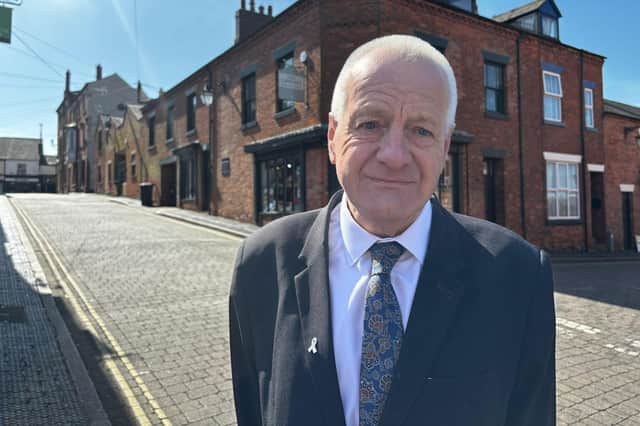
Responding to the changes, Coiun Milan Radulovic (Brox All), Broxtowe Council leader, said they were ‘long overdue’ but he now has ‘much more confidence’ they will enable his authority to have more control over maintaining its housing stock.
He said: “It’s not the solution, but it’s a step in the right direction.
“We’ve always feared the council would build new homes and in a few years there would be a Right to Buy application put in.
“It guarantees if anyone does submit a Right to Buy application that it’s basically fair price, not discounts of up to 30 to 40 per cent – the council can build with much more confidence now.”
Coun Radulovic added he hoped the reforms will ‘help to stabilise the rent market’ – where council homes sold under the scheme have been sold and re-let privately.
He continued: “We have less than half-a-dozen four-bed houses in the borough, most were bought through Right to Buy.
"People with families of three or more kids have little or no chance of getting a property that’s suitable.
“What it did was accelerate rental values of properties because of the housing crisis.”
However, while welcoming the new changes, Coun Radulovic cautioned that they still have flaws and lack clarification for certain homes.
He said: “We work on a 30-year payback period.
"The council takes the rent, and that pays for the management and maintenance over a 30-year period.
"If someone can buy after 10 years at a discount, that’s not factored in, so local authorities are continually robbed of finances for management and maintenance.
“There should have been greater clarification on properties available on the scheme and those that are exempt, particularly those built for those with disabilities.
“We have an ageing profile, with complex needs – sometimes in totally unsuitable properties. We need to build the right houses for the right people and in the right area to meet their needs.”
These are not the first Right to Buy changes brought in by the government in recent years.
Back in October 2024, the new Labour Government announced a cut in Right to Buy discounts for council tenants looking to buy their homes.
It was also announced councils could keep 100 per cent of their Right-to-Buy receipts, meaning they could keep more of the money they receive from selling homes under the scheme – previously councils could only use 50 per cent.
This meant local authorities could start to fully reinvest money earned from sales back into creating more social housing.