
Tragic loss of Mansfield railwaymen recalled 100 years on
A tragic night when five railway workers from Mansfield and New Houghton were killed marks its centenary this week.
On September 22, 1926, there was a bad accident on the railway near Hucknall when a group of 11 men went to paint a railway bridge at Linby, but five of them were hit by a train in the fog and killed.
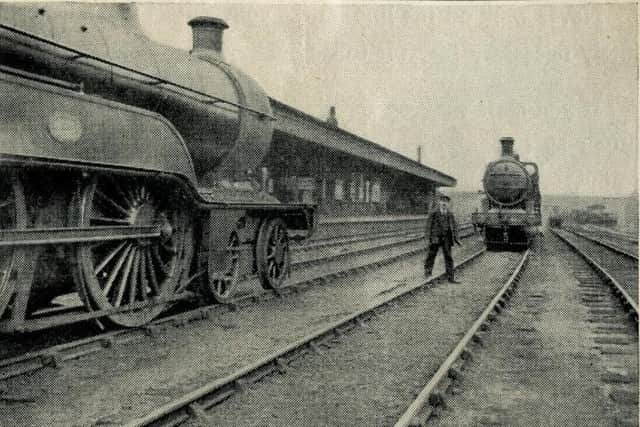

The men who died were Richard Eddacott, 45, from New Houghton and Bertie Scotney, 25, Thomas Rossiter, 27, Clifford Herring, 26 and Cyril Hinsley, 28, all from Mansfield.
Now 100 years on, a group called the Railway Work, Life & Death project, a voluntary organisation which looks at historic accidents to railway workers in Britain and Ireland, wants to bring the incident to people’s attention again so those that died will not be forgotten.
Mike Esbester, from the project, said: “It's clearly a very sad story, but one we'd like to see remembered, especially the five men who died.”
Mike and his team have created a project blog recalling the fateful night.
On the night of the tragedy, a gang of 11 men set off from Hucknall Central on the London and North Eastern Railway (LNER) walking along tracks.
Four men were carrying two buckets of tar between them.
For much of the distance they were forced to walk on the track but facing oncoming traffic so they had time to move when a train came.
Around 300 yards away from the accident site there was space enough to walk off the track but not for the men carrying the tar buckets so they remained walking along the line.
At the same time, the atmospheric conditions changed and a dense fog came down, limiting the view to no more than 12 yards.
The man in charge, under-foreman James Cope, recognised the danger and sent two of the gang forward to keep watch for trains – one of whom was Scotney.
Shortly afterwards a goods train passed on the other line.
Cope then ‘heard something in front and saw a man and a train close upon him.’
The man turned out to be the body of Scotney and before Cope could sound the alarm the train had passed and killed the other four men.
An investigation by JPS Main of the Railway Inspectorate, found that Cope was was seen as a man of ‘considerable experience’ and aware of the rules and regulations about walking on the track.
So how could things have gone so disastrously wrong?
The report was critical of Cope’s actions, given there was ‘no urgency with respect to the work’, and with the passing goods train and fog, all the men should have been called off the track.
That included those with the tar buckets – though that would, no doubt, have been unpopular with them as it would have meant extra effort.
Cope’s comment that he’d never seen fog there before was met with the reponse from Main that ‘the exercise of some common-sense was demanded, and I can only conclude that Cope was lacking in this respect.’
The five men who died were buried at Mansfield Cemetery on September 25, 1926.
The seven men who survived all attended the funerals, alongside representatives of the LNER.
Read the full blog account of the incident at railwayaccidents.port.ac.uk/my-god-come-at-once-five-of-our-men-have-been-done-in/