
The life, death and lasting legacy of one of the world’s most infamous trees – The Major Oak
The Major Oak has helped to attract millions of visitors to experience a place where history, nature and legend meet but the popularity of the iconic tree has sadly contributed to its demise.
The magnificent Major Oak has been at the heart of Sherwood Forest for more than a millennium, alive since before the Norman Conquest and looking on as other Sherwood oaks were taken to help build Nelson’s navy, raise the roof of St Paul’s Cathedral, and fuel the industrial revolution.
Stories of the tree sheltering legendary outlaw Robin Hood have made it famous around the world and cemented its place as an internationally recognised tourist attraction.
It has had many names but the Major stuck after the tree was mentioned in a book by Major Hayman Rooke in 1790, which began the first proper waves of tourism to the forest.
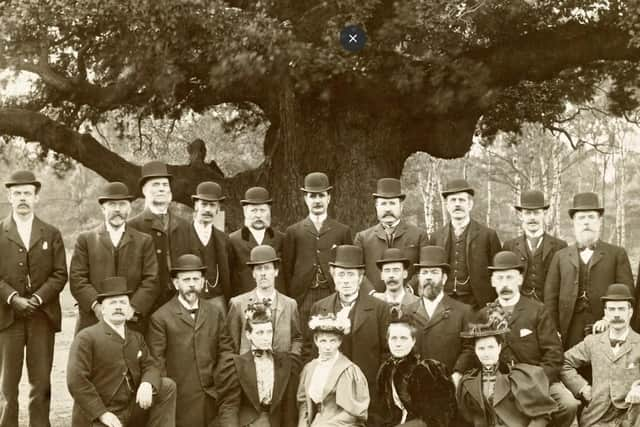

Millions would visit over the next two centuries, drawn by the legends surrounding the tree, which has continued to be an impressive sight with its vast array of limbs, sprawling canopy and large, hollowing trunk which visitors at one time would climb into.
Supports for some of its larger branches have been in place since the early 20th century and were the first of many human interventions in the tree’s health, many of which were well-intentioned but likely to have contributed to the tree’s demise. The area around the tree was eventually fenced in the 1970s, and visitors since have appreciated it at a distance.
A complex combination of issues including more than a hundred years of structural intervention, huge amounts of human activity around the tree and climate change are all thought to have contributed to the trees demise.
Simon Parfey, Managing Director of SoilBioLab, specialists in soil microbiology testing, has been part of the expert team caring for the Major Oak since 2021. He said: “The soil around the Major Oak was under far greater stress than anyone initially realised. Our early surveys revealed a root system that had been quietly struggling for a long time due to naturally poor soil and heavy ground compaction. While the Major Oak team worked tirelessly to revive the environment around this iconic tree — and saw encouraging signs of life in some areas — the damage, it now seems, was already too deeply entrenched to fully reverse.

“This has been a deeply humbling experience for all of us. However, the vital lessons we have learned here will directly help protect and care for other ancient trees across the nation. The Major Oak's true legacy is no longer just in folklore, but in the future of conservation."
The Major Oak is revered not just in the county of Nottinghamshire, which is fiercely proud of the Oak and its strong association with Robin Hood, but around the UK - it won the Woodland Trust’s Tree of the Year title in 2014 - and around the world too.
With a trunk circumference of around 11 metres and a crown of 28 metres, the Major Oak will remain an impressive tree to view for many years to come.
The team of experts caring for the Major Oak will continue to monitor the tree, as well as its structural safety. They will also continue to expand their learnings by completing the planned work around the base of the tree, helping to revitalise the soil and improve the biodiversity of the forest as a whole, and using this work to shape how we care for ancient trees around the globe.
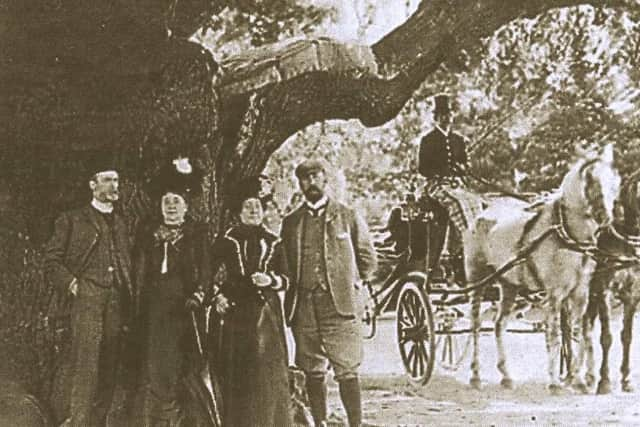
Hollie Drake, Senior Site Manager at RSPB Sherwood Forest, said: “Whilst the tree’s failure to produce leaves this year is heart-breaking for everyone – from the many people over the years who have looked after this magnificent tree to the millions who have travelled here to see it – we know the Major Oak will have a lasting legacy, first and foremost because it is so inextricably linked to Robin Hood and Sherwood Forest. But beyond its cultural heritage, the Major Oak will continue to provide important habitat for wildlife, reminding us why these remarkable trees are so important and why protecting them for the future matters.
“The invaluable knowledge gleaned from taking care of this beloved tree will inform best practises in how we look after ancient oak trees going forwards, not just here but around the world.
“The Major Oak will continue to stand at the heart of Sherwood as a natural monument for visitors to come and see, living on in the legend of Robin Hood and continuing to provide as much support to the forest’s ecosystem in death as in life.”
It may be the end of an era for the iconic and imposing tree that has watched over Sherwood Forest for a millennium but it the start of a new dawn. The tree will still remain an important part of the regions history and stand as a ‘natural monument’ for visitors and wildlife to enjoy for years to come. And perhaps more importantly the life and indeed death of the Major Oak will inform the future of conservation forever – a rather fitting legacy.