
Southwell workhouse infirmary opens for the first time in 30 years
It is not everyday that you get the chance to explore a building which has been closed for the past 30 years, but visitors to one Nottinghamshire attraction can now do just that.
Firbeck Infirmary, in the grounds of Southwell Workhouse, has been restored to give people a chance to explore a world away from our comfortable modern lives
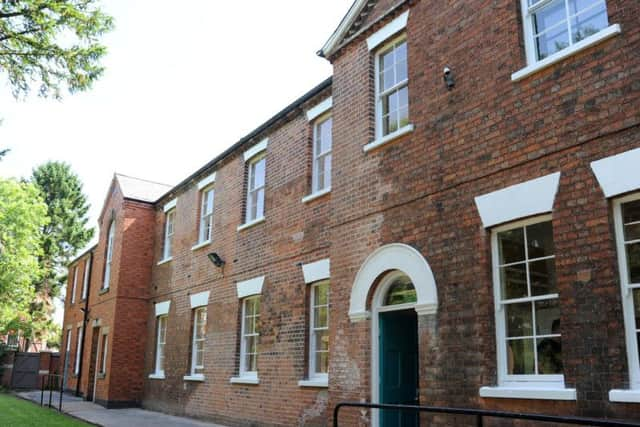

The workhouse, on Upton Road, Southwell, was built in 1824 for the unemployed and destitute – the poorest people in Nottinghamshire.

It provided long-stay care until inmates chose to leave or died of their illnesses.
It became a care ward in the 1970s, but closed in 1989 and was left abandoned and inaccessible – until the National Trust stepped in.
The Infirmary and workhouse
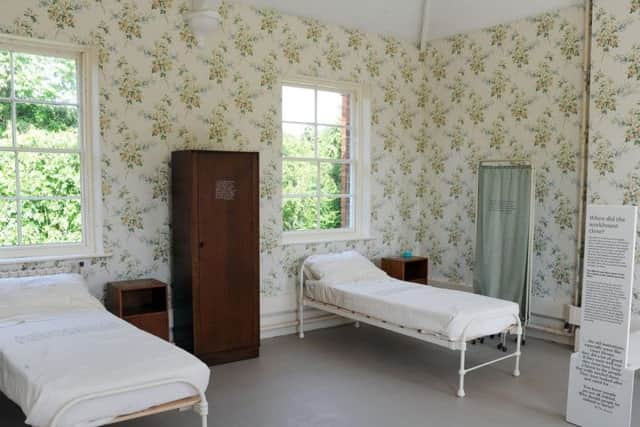
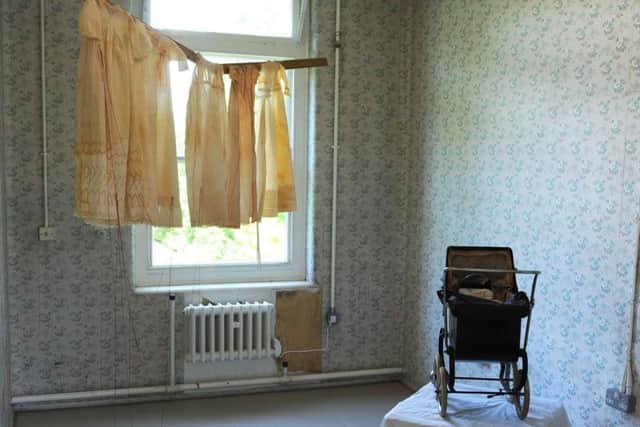
The infirmary, which was not fully accessible to the public, has, over the last five-and-a-half years, been restored to how it might have looked in the 1870s, while part shows what a care ward was like in the 1970s – including the room used by the last resident when the building finally closed in the late 1980s.
And now it has been reopened to visitors
The main workhouse building resembles a prison – its intimidating red-brick facade stands out in the rolling countryside.
It sends shivers down your spine knowing this cold, imposing building would have been a beacon of begrudging hope for so many Victorian families, who would have walked for miles for the chance of a night’s lodgings.
Whitewashed corridors give way to light, airy wards, lined in a floral wallpaper which would make anyone who grew up in the 1970s and 80s feel nostalgic.
Susanna Austin, project curator, painstakingly researched the kind of wallpaper which would have decorated the infirmary when it was a residential home for elderly women in the 1960s and 70s.
She tracked down a supplier of vintage wallpaper in London, to make the rooms as authentic as possible
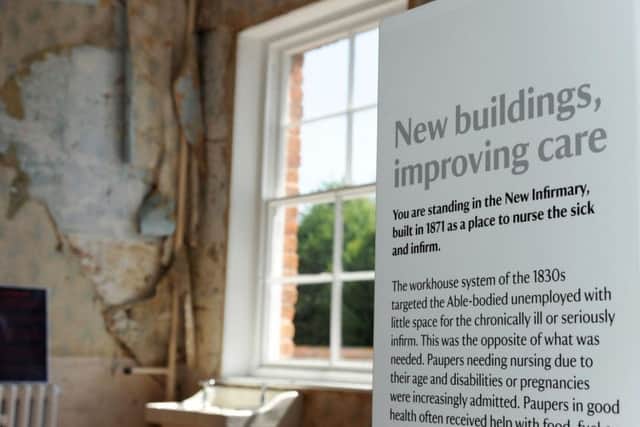
Sara Blair-Manning, workhouse general manager, said the infirmary was in a “really poor state” when the project began on 2014.
She says: “We tried to just piece things together and leave as much of the historic fabric as we could do – we haven’t touched the main fabric of the building.
“It’s important to protect what we have, because, in 50 years, people are going to be looking at this through a completely different lens.
“It’s important to understand how all people were living in the UK.
“The National Trust is renowned for having big houses and fancy collections and that’s great, but it’s up to the trust to tell the story of the normal person.
“Here,in particular, it’s people who were challenged financially and had no support systems.”
By the 1920s, the workhouse had become a training centre in its own right.
Women inmates began qualifying as nurses at Firbeck House, which was now being used by the wider public.
Two entrances take you to separate men and women’s wards, with large sash windows and narrow bedframes – much more welcoming than the cold 19th Century dormitories in the main workhouse.
Replica nursing uniforms are on display, telling the stories of those that wore them –although the first properly trained nurse was not employed until 1900.
By the 1960s, the infirmary looked after the “elderly mentally infirm”, until the last residents left in 1989.
Part of the building now houses a café and offices.
Although the workhouse ceased to exist from 1929, becoming a “public assistance institution”, its legacy of social welfare is ongoing to this day.
In the 1930s, children moved out of the infirmary to cottage homes in Basford, Nottingham, while a new children’s home was built on land next to the workhouse site. This opened in 1937 as Caudwell House and, to this day, provides short breaks for young people with physical disabilities.
Visiting information
The workhouse and infirmary are open seven days a week, from noon-5pm, with a guided welcome tour of the outside buildings commencing at 11am.
For more information, see nationaltrust.org.uk/the-workhouse-southwell