
Kimberley: The real benefits of children's drama classes go far beyond acting
The head of a children's drama group that has a base in Kimberley says the benefits for youngsters taking part in such sessions are wide ranging.
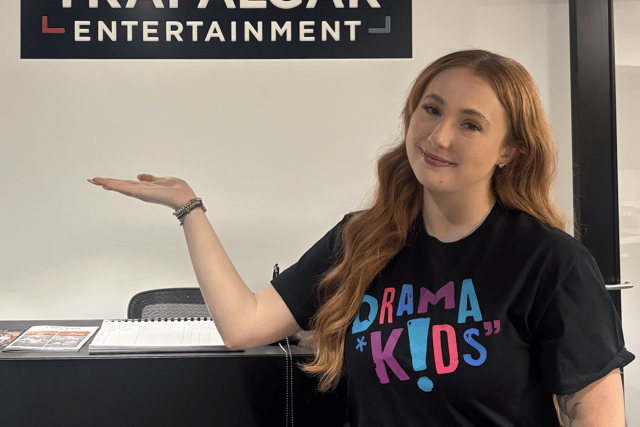

And she says while it’s easy to see drama classes as something fun or creative, their impact can stretch far beyond the stage, because, while very few children go on to become professional performers, the skills they develop – confidence, communication and creativity – are the same ones they’ll carry into school, into future careers and into everyday life.
Beck said: "If your child is naturally outgoing, drama might seem like an obvious fit.
"But it’s often just as valuable – if not more so – for children who are a little quieter or still finding their voice.
"Drama creates a space where children aren’t being asked for the 'right' answer but are simply encouraged to have a go.
"It takes the pressure off and replaces it with curiosity and play.
"For many children, it’s actually easier to speak when they’re not being themselves.
"Stepping into a character gives them a sense of distance, which can make it feel less daunting to express ideas, emotions or even just speak out loud in front of others.
"Over time, that confidence begins to grow and as it does, parents often start to notice small but meaningful changes – whether that’s putting their hand up more in class, joining in more with others or simply feeling more comfortable being themselves."
While confidence is often the first thing parents notice, Becky notes that drama is also quietly building a set of skills that will support children throughout their lives.
She continued: "Through storytelling, improvisation and group activities, children learn how to express their ideas clearly, listen to others, think creatively and work as part of a team.
"They learn how to respond in the moment, adapt when things don’t go to plan and try again.
"These are the same skills that sit at the heart of so many careers.
"Whether your child goes on to work in business, healthcare, education or something completely different, being able to communicate well, collaborate with others and think creatively will always matter.
"The difference with drama is that children are developing these skills in a way that feels natural and enjoyable, rather than something they’re being formally taught.
For Libby Kerys, now a marketing manager at Drama Kids, drama classes helped turn that potential into something she could actually use.
She said: “I was always quite creative as a child – I loved putting on little performances at home.
"But at school, I was much more shy and closed off.
"I had ideas, I just didn’t always feel confident enough to share them.”
With early signs of dyslexia and a stammer, speaking in class felt intimidating for Libby.
But drama offered a different kind of environment.
She continued: “It felt completely different straight away, it was a space where you could just be expressive and imaginative without worrying about being judged.
"Every class was a bit of a surprise – you never really knew what you’d be doing, which made it exciting.”
As she spent more time in that environment, things began to shift.
She said: “Over time, I just became more comfortable speaking and being myself.
"I learned how to work with other people, speak more clearly and push myself a little bit outside my comfort zone.”
Drama Kids says often, there’s a moment when something changes for a child – when they realise they’re capable of more than they thought.
For Libby, that moment came when she played a speaking role in a production of Circus Capers.
“I remember how excited I was – it was one of my first proper speaking roles.
"And I realised quite quickly how much I loved making people laugh. Hearing the audience react gave me such a boost of confidence.”
As Libby moved through school, the benefits of drama became clearer.
She said: “I first noticed it at school, especially when we had to present or work in groups. It didn’t feel as daunting because I’d already had that experience through drama.”
That confidence didn’t fade – it grew with her.
Through university and into her career, communication became a key part of what she does.
Now, as a marketing manager, she regularly presents ideas, leads discussions and works with different teams.
She highlighted: “Confidence plays a big role in what I do now, I’m often presenting ideas, sharing insights or speaking with different people across the business, so being able to communicate clearly really matters.
“Storytelling is such a big part of marketing as well.
"Drama teaches you how to build a narrative and connect with people, and that’s something I use all the time in my job.”