
“It’s going to happen whether we want it or not": Bolsover Council’s job reassurance over plans to scrap local authorities
Bolsover Council has given some reassurances over the future of jobs at the authority as it stressed the importance of continuing to work under Local Government Reorganisation (LGR) plans.
At a meeting on January 28, the council stressed how important it is to keep working under the Government’s LGR plans to scrap or merge county, city, district and borough councils in two-tier areas as it considers replacing them with either one or two unitary authorities for the county.
The Labour-controlled council also gave some reassurances that most jobs under the Government’s LGR plans for change will continue to be needed to maintain services but higher, more administrative roles may be more vulnerable.
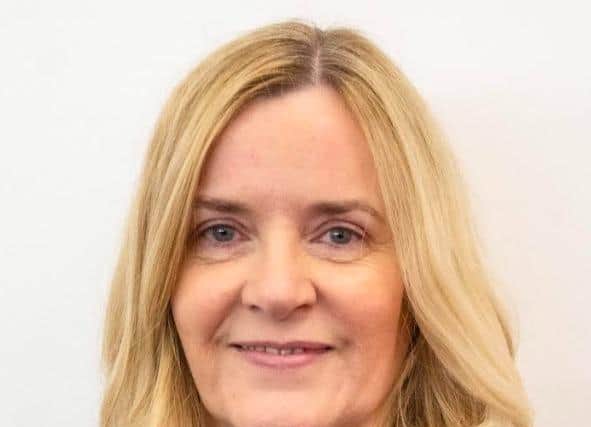
Karen Hanson, chief executive, said: “Underneath the chief executive and potential statutory officer posts what we hear from other councils is that staffing establishment remains pretty unchanged for the time being because services will still need to be fulfilled.”

The Labour Government’s LGR plans aim to set up single, unitary authorities across England with an elected mayor in two-tier authority areas like Derbyshire by scrapping and merging city, county, borough and district councils in a bid for greater efficiency and financial savings.
Bolsover is among seven district and borough councils as well as Derby City Council to propose variations on a ‘One Derbyshire, Two Councils’ model with one northern unitary authority and one southern unitary authority, while Derbyshire County Council has proposed one single unitary authority for the whole of Derbyshire and Derby.
And although Derbyshire Dales Council opted not to submit proposals it has indicated a preference for two unitary councils for Derbyshire including northern and southern authorities.
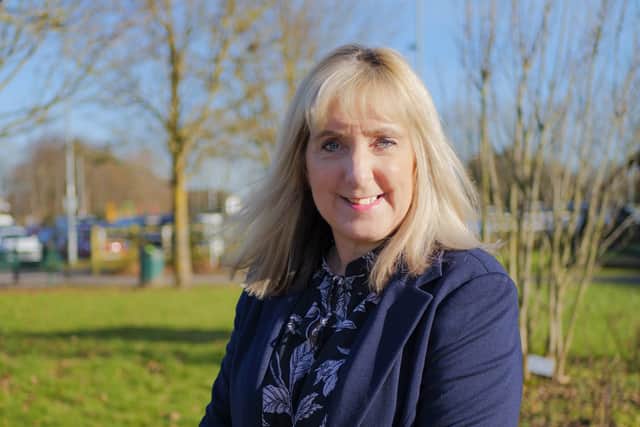
Ms Hanson, stressed that, following a decision in the summer on the preferred LGR proposal for Derbyshire, a joint committee will oversee structural changes and there could be potential redundancies at the council’s higher levels.
But other staffing is expected to remain largely unchanged because services will still be needed.
The UNISON union has stated that LGR in Derbyshire must be about levelling up communities and strengthening public services with proper funding and protection for employees and not about cutting costs or putting jobs at risk.
Ms Hanson and Sarah Kay, the council’s interim director for planning, devolution and corporate policy, confirmed a seven-week statutory consultation on all the submitted proposals is due to start in February for local authorities and public bodies before a decision in the summer of 2026 on how local government is to be reorganised.
Under the Government’s current timetable, elections to the new shadow authorities could take place in May 2027 and the new unitary councils could start to operate by April or May 2028.
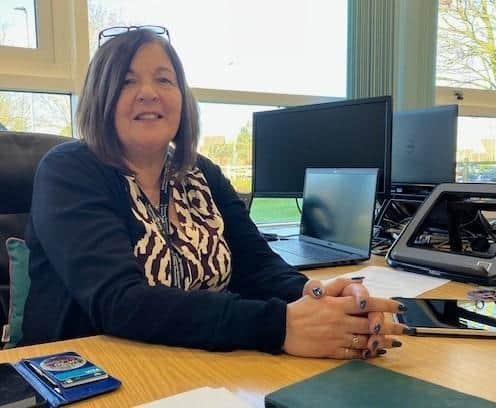
Ms Hanson told the meeting: “We have not had examples of areas where districts or boroughs have been split and we will be looking very carefully to see whether the Government is inclined to look at that, or shy away from that.”
“We must continue to do well for the district, as well as we possibly can, and not take our eye off the ball and the Government does not want services to suffer because of LGR.”
Ms Hanson told how the council has met with the minister for local government and homelessness, Alison McGovern MP (Lab) and that the Government believes LGR will strengthen local government and help to tackle poverty.
She added: “They have acknowledged the timetable is challenging but they confirmed that the Government is still committed to it and have the resources.”
There are no proposals to cancel any town and parish council elections during the planned transition, according to Ms Hanson, because town and parish councils are not directly affected by LGR although some more guidance may follow from the Government about ‘neighbourhood elements’.
Bolsover Council says it is continuing to meet with various working groups during the planned transition and there will be ongoing conversations with the county council while pressing the district council’s case for change for two unitary authorities.
Ms Hanson also said that she assumes the Government will make a decision whether the Bolsover Council’s elections – which would ordinarily take place in May 2027 – will happen or not, or be deferred as has been decided for some others elsewhere in the country.
Coun Donna Hales (Lab), council deputy leader, told the meeting: “If we do not do this work, we will be classed as an ‘orphan organisation’ and things will be done to us.
"If we sit back and let this happen to us we will not be in a good position, so we do have to do this work.”
The Government has argued LGR will include elected mayors with more powers on planning and transport and that the changes will create savings, create greater efficiency, improve public services, and support economic growth.
But critics are concerned about the loss of councils and councillors with Derbyshire to be reduced from 447 councillors to 162 if the LGR plans go ahead.
Critics also fear a loss of local control with a risk of greater Government influence, the removal of local decision-making, tax increases, powers being taken away from communities and doubts about whether the plans will create savings.
Derbyshire Council has claimed its proposal for a single unitary authority will create a more cost effective system with greater savings and avoid a geographical split unlike the city, borough and district councils’ ‘One Derbyshire, Two Councils’ proposal.
While advocates for the proposed ‘One Derbyshire, Two Councils’ model, have argued it will keep the councils connected to local residents and their needs, transform and provide effective value for money services while preserving local identity and protecting Derbyshire’s historic boundaries.
Bolsover and NE Derbyshire have proposed that NE Derbyshire, Chesterfield, Bolsover, High Peak, Derbyshire Dales and part of the Amber Valley should be in one northern unitary council, and Derby City, Erewash, South Derbyshire and part of Amber Valley should be in a southern unitary council.
Some of the councils supporting the ‘One Derbyshire, Two Councils’ model want different parts of Amber Valley in the north and the south, while Amber Valley wants to be in a northern unitary council, and South Derbyshire Council wants Amber Valley to be in a southern unitary council.
Resident Nick Clarke, who was permitted to speak at the recent Bolsover Council meeting, criticised the council’s decision to increase its council tax precept by 2.99per cent because he believes the council’s reserves should be used before they are soaked up under the proposed LGR changes.
But Coun Clive Moesby (Lab), resources portfolio holder, said it is still necessary to be ‘prudent and sensible’ to continue to provide services in the face of uncertainty over Government funding and LGR.
He said: “Until we do get LGR approved, as a council, we have a duty to ensure we have got the reserves in place to deliver the services, to have a duty of care, to have the billing in place to keep delivering services.”
Coun Deborah Watson (Ind), Independent Group leader, questioned why the council should ‘blindly follow’ Government directives and assumptions to increase its council tax precept and comply with LGR plans and she also asked the council leader whether she believed LGR is best for the district?
Coun Jane Yates (Lab), council leader, replied: “It’s going to happen whether we want it or not.
“In my heart of hearts, do I want it – no.
"But it’s absolutely crucial we are at the top of the table and we have a say.”