
I went to Hardwick Hall to discover the remarkable tale of how Bess of Hardwick left her mark on British history - and it's a fascinating story

When we study British history we learn about the key battles and wars that has shaped our nation's past, present and future, the often heroic Kings and Queens who led the country to glory and empire and the many great role models to have made their name.
But one person we sadly do not often hear about, at least if you live outside Derbyshire that is, is the inspirational Bess of Hardwick who left such an unforgetable mark upon this particular part of the country, which still lives on to this day through the county's tourist industry.
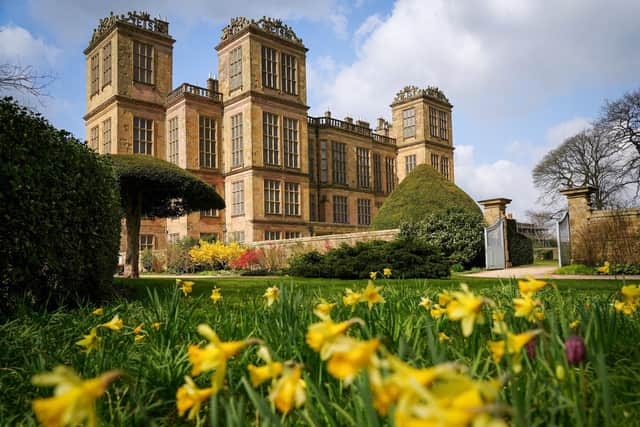

Bess, who was born Elizabeth of Hardwick in 1527 in the medieval manor house which once occupied the site of Hardwick Hall, rose from financial hardship to become the second richest lady in the realm behind Queen Elizabeth and enjoyed all the power and iconic status that came with such richness.
As well as being a very wealthy and important lady the determined Bess, who married her cousin, aged 13, in an effort to alleviate her family's financial difficulties, also provides the perfect role model to this very day.
With very little, Bess worked her way up to the top of British society, fighting her way upwards in the male-dominated world of the time, to become a self-made success story and create an ever-lasting legacy. The visionary lady knew what she wanted and nothing, it seemed could stand in her march to the top.
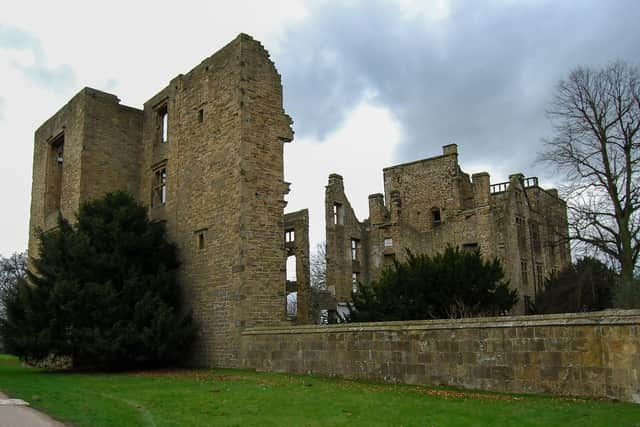
Nowadays her former Hardwick Hall home is one of Derybshire's most important and popular tourist attractions, ensuring the amazing legacy of this amazing woman lives on more than 400 years after Bess passed away at the unheard of age of 81.
And, with the tale of this fascinating woman in mind, I set out to meet my guide Judy Williams, who I soon found out had more than a bit of Bess in her, to learn all about the lady behind the tale and the her richly-designed symbolic former home.
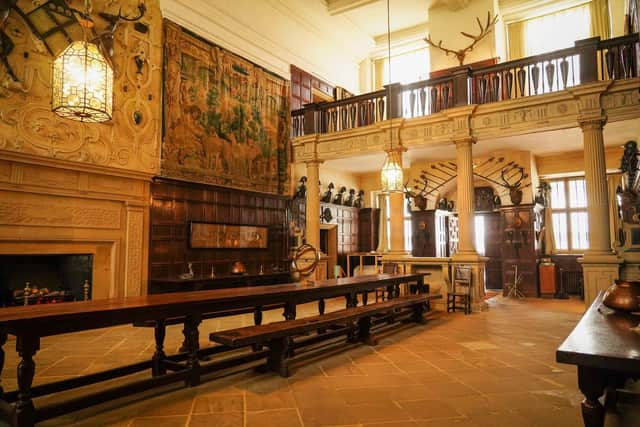
We begin our guide of the beautiful building in an impressive, if somewhat chilly, reception room, the place where all visitors to Bess's magnificent personal kingdom would have first entered.
"This area also doubled up as the servants area so it would have been bustling with life with servants coming and going, with people eating and with the smell of food and chatter," says the bubbly Judy with real enthusiasm.
"When the important guests came in the servants would all stop what they were doing, stand to attention and keep their heads down while the guests sailed through into the main house."
This instantly strikes me as a rather odd notion. The thought of Lords and Ladies of the realm making their way through the common folk to get to the iconic Bess must have made quite interesting viewing.
It is also a rather striking methophor for Bess's own fairytale rise from local country girl to the very top of the British social ladder.
Taking one look around this splendid room, with its tall ceiling and strikingly expensive and rare decorations such as civil war weapons, a suit of armour as well as paintings and finely-crafted furniture, it is perhaps obvious why Bess was so eager to show it off.
"This is a very exiting room," Judy says animatedly revealing her fondness for all things Bess. "Bess was not short of a penny or two and it shows in this room and the possessions she had.
"The children who visit this room love all the weaponry,"she adds with a chuckle, before pointing to some chainmail of a 16th Century soldier on the wall. "This is a very rare item. We didn't realise just how rare it was but apparentely it's very rare to get the leg-ins as well.
"The boys just love it. Some of the armour even has bullet dents in it when it was tested to see if the armour worked."
Judy is a retired lady who has a real air of drama and the theatrical about her. And it's rather fitting that she does as the talented Judy, when she's not being kind enough to be my personal guide, plays the role of Bess, dressing up in authentic costumes to enchant visitors when Hardwick Hall hosts special celebration events.
"This is my 15th season at Hardwick. I started the year before the Queen came to Hardwick on the anniversary of Bess moving in," the history-loving Judy reveals with pride.
"At first I was so scared. I felt I knew nothing, but I knew about Bess since childhood,"she says rolling back the years fondly. "I read a book about her when I was a kid. I couldn't believe it when I visited Hardwick Hall for the first time.
"When I took early retirement I started here at Hardwick. I always liked history and used to teach drama, which goes very nicely with it,"she adds with a slight chuckle. "When I first started I was allowed to play Mistress Digby, Bess's favourite lady-in-waiting, giving the introduction talk.
"This year, once a month, I am going to be giving the introduction talk as Bess, so it is a bit of a promotion." It certainly is a much-deserved promotion for Judy, whose refreshing passion and interest in her subject certainly helps to bring this particular period of history to life.
Judy then takes me up the most imposing set of stairs I have ever seen, as we wind our way steepily upwards towards the commanding High Great Chamber, one of Bess's private ceremonial rooms which were used for entertaining.
The steep gruelling climb reminds me of walking the famous 199 steps up to Whitby's gothic abbey.
I'm also massively aware of just how daunting and nerve-wrecking this voyage into the unknown must have been for people visiting famous Bess for the first time.
Second only to Queen Elizabeth in financial terms, Bess was renowned across the land and was so close to the Queen she was even trusted to keep Mary Queen of Scots under house guard in the run up to her eventual execution.
You could say she had the allure and iconic stature of a modern day pop star or Premier League footballer.
"This staircase is just fantastic,"Judy reveals in a respectful hushed tone. "In those days there would have been guards at every landing. This staircase was all about impressing guests and it certainly does just that."
Wealthy Bess, who at the time was the Countess of Shrewsbury following her latest and final marriage, ordered construction work on the magnificent Hardwick Hall to begin in 1590.
to act as a symbol of her power and wealth and to send out an everlasting statement of her defiance as a woman come good in the male dominated world of the time.
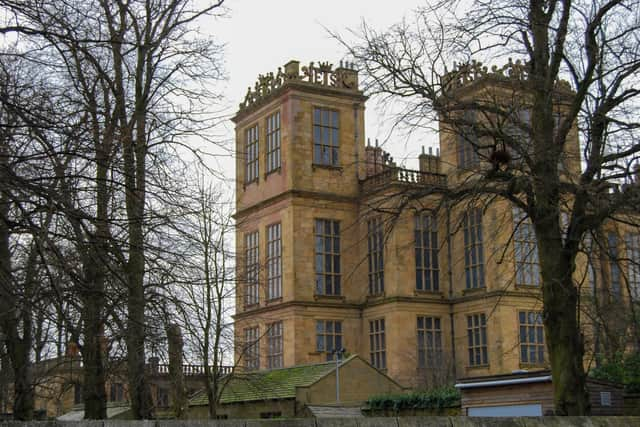
After nine years of painstaking work her personal castle was finally finished in 1599 and featured her initials E.S. taking pride of place at the top of each wing of the building and an unparralled amount of glass, which was highly expensive at the time.
The result was an amazing building fit for any Queen in Europe and the most sumptious of all symbols of her wealth and popularity and fittingly had, just like Bess herself, a very large dose of glamour.
Once inside the High Great Chamber, I'm instantly filled with the 'wow' factor as the soaring ceilings and vast church-like glass windows allow waves of sunshine and light to flood in. It is a room that more than lives up to its glorious name.
"People would walk up the stairs breathless and over-rawed and then, at the end of the room, there would be the lady of the house, Bess herself, waiting to receive her guests."explains Judy, who is a touch breathless herself.
"She would be sat there like a Queen. And for many people of this area who would not be able to go to London to see the real Queen, she was just like their Queen. She was terribly important," Judy continues with clear feelings of admiration for the lady she now occassionally pretends to be.
It seems many buildings of national historical importance around Britain are blessed with one impressive room or hall followed by another one through the next doorway.
And 16th Century Hardwick Hall, now owned by the National Trust organisation, is no different as Judy leads me on to the next "wow" room of this inviting national treasure - the fittingly named Long Gallery.
The Long Gallery, with its far wall stretching way into the distance, is the second widest and biggest in volume in Britain and really is a true treasure. It includes some of the most important paintings and tapestries in the nation, which has attracted the attention of emminent historians including Dr David Starkey
looking to feature them in television documentaries.
"In 1591 Bess went up to London on a buying spree and bought 13 tapestries of The Story of Gideon from the Bible second hand for £321, 15shillings, 9p." Judy explains.
"I have the feeling that the ceilings in this room are this high because of the tapestries she bought." It's not a typical woman's shopping spree but Bess certainly chose her purchases very wisely.
But, as you would expect, Hardwick guards such valuable relics very closely indeed.
"Dr David Starkey wanted to have our picture of Queen Elizabeth, but we said no. It's the only one we've got,"Judy explains with an air of defiance which Bess would no doubt have approved of.
After our increasingly interesting tour of the top floor is completed Judy, who is really getting into the spirit of things like any good estate agent trying to sell a property, takes me down to the middle floor where Bess and her family spent most of their days.
It is also the area where the more recent owners of Hardwick lived and offers a stunning blend between the Elizabethan decor and more modern age items such as photographs.
"We're coming down the stairs to where Bess and her family lived,"shouts Judy over the noisy thuds of our footsteps on the stone stairs. "This is a bit of a smaller area, the family lived off and on here right until 1960 so there is a good mixture of possessions here.
"We have bathrooms and toilets, a dressing room. It's a real transformation into the modern age. There are bedrooms at either end of the corrider with two social rooms in between, where the gatherings took place before people went off to bed."
Judy then takes our minds away from the present era and back to the fascinating world of Bess of Hardwick as she points out a spectacular piano in the centre of this spacious grandious room, a perfect place for wining and dining England's greatest noblemen and women.
"This piano dates back to 1812. And there on the other side of the room is this peculiar oblong instrument which were played by young girls,"says Judy.
"This room would have been full of life during Bess's time. There would be games, music and lots of room to chat with other people." It really was the nightclub of the Elizabethan era.
Bess had around 100 servants who were tasked with making Hardwick Hall a delightful place to live in and visit and making sure the lady of the house and her never-ending procession of important guests were kept fed and watered.
No doubt many of them living in the hustle and bustle of Hardwick would have looked upon Bess as an inspirational role model and dreamed of making their way up the social ladder towards fortune and a better life.
"It is a paradise here,"Judy exclaims with a big beaming smile on her face. "I love it for the history, but it's good that the children who come here also love it. It is great for them to be able to see how people lived during that era, which is so very different to live nowadays.
Judy, now on a real roll, adds: "There was so much heirachy. Hardwick Hall was the big business and the factory of the day. It is great finding out about the lesser known people who did the work around Hardwick
"This house meant food on the table and a place to sleep for many people. Hardwick is a fantastic place for young and old to visit. There is something for everyone."