
From Eastwood to Beijing: DH Lawrence legacy goes global
A fruitful partnership between the DH Lawrence Museum in Eastwood, Nottingham Trent University and Beijing Language and Culture University is to be celebrated during the 2026 Spring Festival.
The partnership began in 2024, when the Beijng students created the exhibition ‘A Journey with DH Lawrence’ which explores the writer’s nomadic wanderings as well as his upbringing in Eastwood, and uses these themes as inspiration for the students’ own creative journeying:


They wrote: “Following the master's footsteps, we journeyed across his homeland, through the bewilderment of mist-shrouded Britain, witnessed the blaze of his spiritual struggle, and trod the distant path of a savage pilgrimage, with appreciation for his quest for the dwelling place of soul.”
Originally displayed at the museum, the exhibition is now presented in the university’s library in Beijing.
A second exhibition is set to be created later in the year, bringing Lawrence’s legacy to a whole new audience.
Last year saw original artefacts from the museum’s handling collection sent on loan to China, allowing students to gain a deeper understanding of the author and museum and heritage work.
The items also formed the inspiration for several creative projects that groups of students in Beijing have been working on as part of their studies.
In celebration of the partnership, exchange students from Beijing, currently at Nottingham Trent, have created a series of videos with readings of Lawrence poems alongside poems from Chinese authors chosen to sit alongside, all filmed in Lawrence’s birthplace.
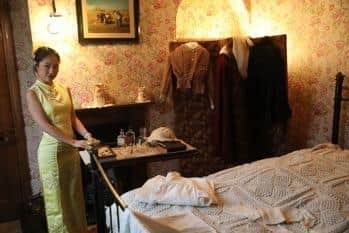
The partnership extended to volunteer work at this year’s museum deep clean, where exchange student Rhea, was able see first-hand, and take part in, the work that goes into maintaining the collection of one of England’s greatest writers.
Carolyn Melbourne, museum and collections officer, said, “This partnership has been good for the museum in so many ways, from extending Lawrence’s reach internationally and widening access to the museum collection, to practical hands-on support for the museum.
"Rhea is proving a great addition to the museum’s volunteer team and seeing all the volunteers getting to know each other and working together so well is just brilliant, a great example of cultural exchange.”
Rhea herself said: “Being in the museum felt like stepping onto a living stage where the space itself is an exhibit.
"The rooms, light, and atmosphere all seemed to carry echoes of the past.
"Volunteering there gave me a powerful sense of travelling through time, as if Lawrence’s world were still breathing around me and gently shaping how I perceived the space.
"It reminded me that museums, much like theatre, can draw visitors into history and awaken deep emotional resonance through their stories and objects, allowing us to feel both close to and reflective about the past.
“Taking part in the deep clean also allowed me to see the care, craft, and dedication behind the scenes, and to reflect on similarities and differences between museum practice in China and the UK, which has been an enriching cultural exchange.
"I’m deeply grateful for this experience, which has been both professionally enriching and personally moving.”
Neville Stankley, senior lecturer of museum and heritage modules at Nottingham Trent, said: “Using the real museum objects from the museum has improved the student learning because they invite students into a deeper, more textured kind of thinking.
"When someone handles or closely studies an authentic artefact, they are not just absorbing information – they are engaging with evidence that carries its own history, materiality and unanswered questions.
"That immediacy encourages curiosity, sharper critical analysis and a more personal connection to research and creativity.
“It also encourages students to grapple with the multiple possibilities of interpretation, but also the limits of what objects can tell us, which are all essential museum and heritage skills.
"In many ways, the objects have become a partner in the learning process, prompting students to look closer, think harder, and engage more fully with their discipline.”