
Eastwood: Wildlife forced out as more than 100 homes are built on former Raleigh site
Residents living nearby a bike giant Raleigh’s former headquarters in Eastwood say they are saddened wildlife has been forced out since works started on site for more than 100 new homes.
The former Raleigh site on Church Street is due to be turned into a new housing development after plans were approved by Broxtowe Council in September.
The £41m development, led by property developer Homes by Honey, will be called Raleigh.
Out of the 113 open-market homes, there will be four two-bed, 56 three-bed, 48 four-bed and five five-bed homes.

The scheme will include 12 affordable homes, comprising four one-bedroom, four two-bedroom, and four three-bedroom units.
Council officials have their eyes on securing some of the affordable homes to boost the authority’s housing stock.
The site has been cleared and work commenced on September 29 to remove trees between the development site and existing homes that back on to the site.
But this has upset a number of residents.
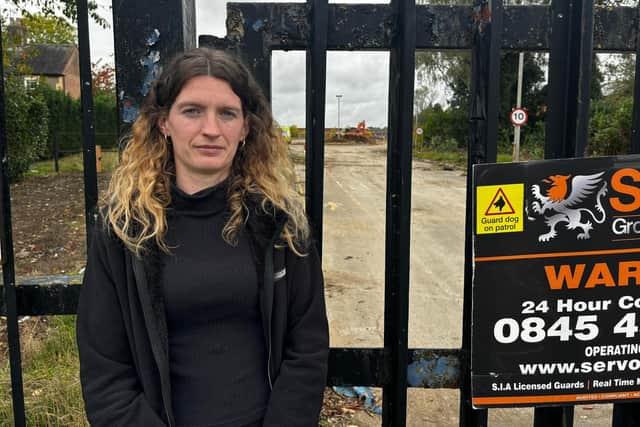
One nearby resident, Demi Green, has been living near the site for around 10 years and says her garden was often visited by wildlife before the land behind her home was approved for housing and the trees were cut down.
She told the Local Democracy Reporting Service: “The animals are definitely gone, all the little birds, blue tits, wagtails, a blue jay, the buzzard, nothing comes like that any more.
“Even the squirrels are gone.
"The trees were their playground when they were nesting and trying to find their way.”
Ms Green says she is now looking to move, adding: “That’s how much it’s affecting me, for that future neighbour to be looking through my window.
“It does make me sad, I don’t think I’ve ever had such a good community of neighbours and people who actually stick together.
“The development just makes me depressed.”
Fellow resident Amy Smith echoed the concern for loss of privacy with the future homes being built directly behind her home and the row of trees no longer being there to separate the existing homes and new ones.
She said: “Nobody wants to get up in the morning, open your blinds and see a big house there.
"They could have kept the trees – put the houses behind them.”
Existing residents’ gardens near the site have previously dealt with water and drainage issues.
Ms Smith added: “If I get a bit of rain, it takes three days for my garden to dry out because there’s no drainage – the trees used to shelter it.”
“If the new homes are going to be higher up as well, we’re going to have more water flow and we currently can’t get rid of what we get, never mind more.”
She said she hopes to see more trees planted as the housing development progresses to give existing residents ‘a bit of a border’.
Responding to the residents’ concerns, Coun Milan Radulovic (Brox Alliance), council leader said: “I’ve asked for the opportunity to sit down at the table with the applicant to discuss some of the issues and how best their plan be adapted and altered to fit the criteria many local people are asking for.
He added that he has asked the applicant and developer for the creation of a ‘wildlife corridor’ that could be between 25 and 30 metres, adding: “If they can’t do it, let’s sit down and see if they can do 22 metres.
"There’s nothing that can’t happen to make it an exemplary site.”