
Bolsover council staff expected to ‘stay the same’ under planned Local Government changes
Bolsover District Council’s chief executive has explained its local authority staff are expected to remain the same under planned Local Government Reorganisation changes and councillors can expect to face a transition period with a new election.
The Labour Government’s Local Government Reorganisation plans include setting up unitary authorities across England with an elected mayor in counties by merging or scrapping councils in two-tier authority areas like Derbyshire that operate county, and then district and borough councils.
Derbyshire’s eight district and borough councils including Bolsover as well as Derby City Council and Derbyshire County Council, have proposed that the county should be split into two unitary councils for the north and south which the Government will consider before any decision.
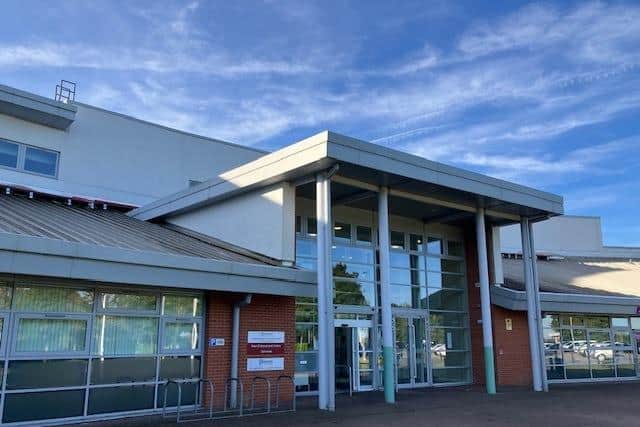
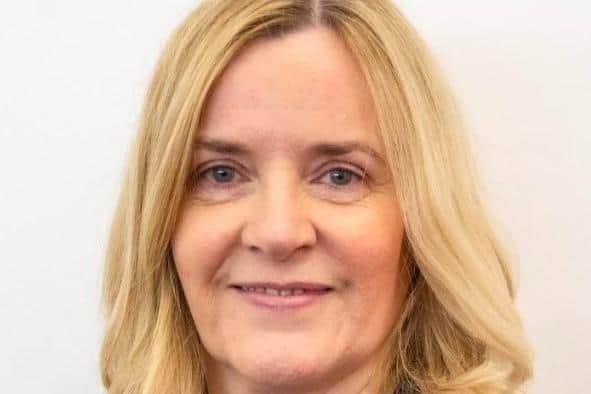
Bolsover District Council’s chief executive Karen Hanson told a Full Council meeting, on July 30, that council staff will ‘stay the same’ within TUPE transfer regulations as they are expected to be moved over to a new authority under any new council arrangements between 2027 and 2028 with no expected break in services.

She added councillors are expected to remain in the council to allow for new councillors to be elected during new Derbyshire council elections earmarked for 2027 and district councillors may work alongside the new ‘shadow unitary council’ during a transition period.
Ms Hanson said: “We will have to work in a complicated situation for 12 months and the Government will provide guidance on that.”
The ‘One Derbyshire, Two Councils’ proposal argues that the northern and southern councils will be large enough to deliver efficiency whilst remaining close enough to communities to understand and meet local needs and it is hoped reorganisation will strengthen Derbyshire’s voice at regional and national levels.
Ms Hanson said: “One of the things that is important for members is that we wanted to maintain Derbyshire’s historic borders. It recognises the borders of Derbyshire and does not move outside this.”
She added the restructure could save an indicative estimate of between £56m to £93m over five years and the ‘One Derbyshire, Two Councils’ report explained this could be achieved through a reduced duplication of services, fewer council buildings, fewer councillors and senior managers and better economies of scale.
Ms Hanson also shed light on the three options being considered by the county’s councils on how best to potentially divide up the two proposed unitary northern and southern councils.
Three options under the districts and boroughs’ ‘One Derbyshire, Two Councils’ proposal include placing Amber Valley Borough Council entirely in the northern council, or entirely in the southern council, or dividing it between the two with its different parishes joining each of the two councils.
Option A to place Amber Valley in the northern council would see a northern population of 584,000, and the southern council area would have a population of 494,000.
A report presented to the council explained the northern council may subsequently benefit from an economic boost but the southern council may face additional financial pressures and there may be a potential imbalance in the demands for social care on each council in this scenario.
Option B to place Amber Valley in the southern council would see a northern population of 456,000, and the southern council area would have a population of 622,000.
Benefits in this scenario, according to the report, would include potential growth for both councils but there would be a disparity in population and their economic potential and output.
Option C to have different parishes from Amber Valley joining each of the north and south councils would give a northern population of 567,000 and a southern population of 511,000.
This would create a more balanced population and demand for services between the two council areas, according to the report, but it would be potentially more complex to split the north and south with the need for internal boundary changes and the break up of services may prove to be more complex.
The report, on behalf of the eight district and borough councils and Derby City Council, stated: “We believe the proposal and options we have set out put us in the strongest position to create councils which are big enough to deliver, but close enough to listen and respond to the needs of our communities.”
Ms Hanson also explained that town and parish councils are not part of the proposed changes but the Government has stated it wants to strengthen the relationship between town and parish councils and the proposed new unitary councils.
This district and borough councils’ public consultation is available online at https://bit.ly/Derbyshire-consultation after it began at the end of June and lasts until August 10.
Derbyshire County Council’s questionnaire is also available online at www.derbyshire.gov.uk/councils with a closing date for completion on August 19.
The views of people and organisations will feed into the development of final proposals which must be considered by existing councils and submitted to the Government by November 28 who will review all proposals before making final decisions in the summer of 2026.
Ms Hanson encouraged the public and anyone who may be affected by LGR to engage with the consultation process.
If the Government accepts the proposals for Derbyshire, elections for the new shadow authorities are expected to take place in May, 2027, and new councils would be expected to start to operate by April 1, 2028.
The Government has argued that LGR plans will include elected mayors with more powers on planning and transport, and that the changes will create savings, create greater efficiency, improve public services, and support economic growth.
But critics are concerned about the loss of district and borough councils, a risk of greater Government control, the removal of local decision-making, tax increases, powers being taken away from communities and some also doubt the plans will create savings.
Derbyshire’s eight district and borough councils include Amber Valley Borough Council, Bolsover District Council, Chesterfield Borough Council, Derbyshire Dales District Council, Erewash Borough Council, High Peak Borough Council, North East Derbyshire District Council, and South Derbyshire District Council, as well as Derby City Council.