
Opportunities missed to assess ex-miner’s condition during eight-hour ambulance wait before his death at King’s Mill
Opportunities to assess the urgency of an ex-miner’s medical condition were missed when he endured an eight-hour wait for an ambulance but they wouldn’t have prevented his tragic death at King’s Mill Hospital, an inquest heard.
David Brian Boyd suffered two cardiac arrests before reaching the emergency department at 1.13pm on October 26, 2024.
After discussing the situation with his family, the decision was made to cease resuscitation and he died at 2.45pm.
Assistant coroner Sarah Wood said a post-mortem found his death was due to natural causes: acute peritonitis caused by a perforated ulcer of the colon, with chronic obstructive pulmonary disorder (COPD) as a contributory factor.
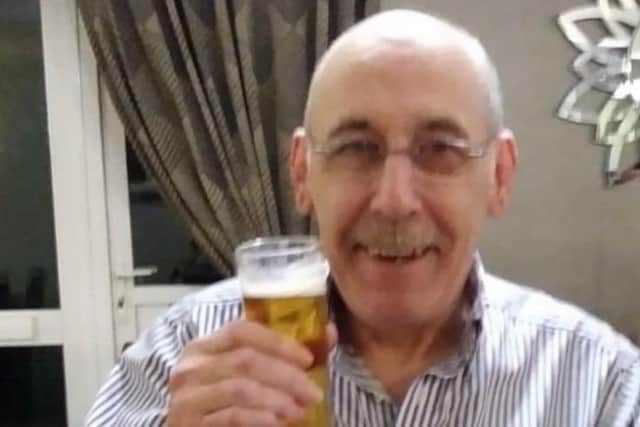

The inquest on March 18 heard that David’s 30 years as a miner also contributed to his death, and the 70-year-old had a medical history of hypertension, COPD, and rheumatoid arthritis.
David's wife called NHS 111 at 3.21am when he complained of urinary problems and abdominal pain.
Mrs Boyd was told there were four-to-eight-hour delays for ambulances when she called 999 for an update at 7.26am.
David was experiencing chest pains and had vomited black liquid six times by the time a clinician contacted his wife at 10.31am.
A category 2 ambulance was requested, which has a national target average response time of 18 minutes. The nearest available double-crew ambulance was dispatched at 11:01am, arriving seven hours and 40 minutes after Mrs Boyd’s original request.
A third paramedic was needed to carry out emergency treatment before he was taken to King's Mill, arriving at 1.20pm.
Dr. Tarun Sharma, a GP and clinical director of 111 services at Derbyshire Health United (DHU), said an investigation was triggered after a Category 4 ambulance - which refers to non-urgent, non-life-threatening incidents that require clinical assessment or transport within three hours - was initially requested for David.
He said that ideally, questions should have been asked about David’s medical history and his fluid intake but he would still have remained on the same treatment pathway.
Recording a narrative conclusion, the coroner said there were missed opportunities to re-categorise the urgency of David's case, but they would not have affected the outcome as he was so frail.
Keeley Sheldon, director of quality at East Midlands Ambulance Service (EMAS), apologised for the delay and expressed her condolences.
“Patients waiting hours for an ambulance response is unacceptable,” she said. “At the time of the call for Mr Boyd, we were experiencing very high demand for our service, and lengthy patient handover delays at hospitals meant we were unable to get to him sooner.
“EMAS has continued recruiting patient-facing staff, investing in new vehicles and working with our hospital partners to improve handover delays and response times. Since October 2024, response times have improved on average.”
David was born in Northumberland and moved to Welbeck Colliery Village, now Meden Vale, on his 13th birthday in 1967. After school he went to work in the colliery where he spent the next 30+ years before retiring as an Overman.
“He married our mother Marie in 1980 and loved providing for his family, ensuring nobody went without, and enabling myself and my brother Gary to follow our endeavours in sport,” his son Mark said
"In his later years he enjoyed watching his boyhood football club Sunderland and spending time with his grandchildren.”