
Fears for Nottinghamshire’s famed Major Oak in Sherwood Forest as drought provokes false autumn

One of the nation’s most famous and beloved trees is under 'severe stress' after the warmest summer on record has triggered a false autumn.
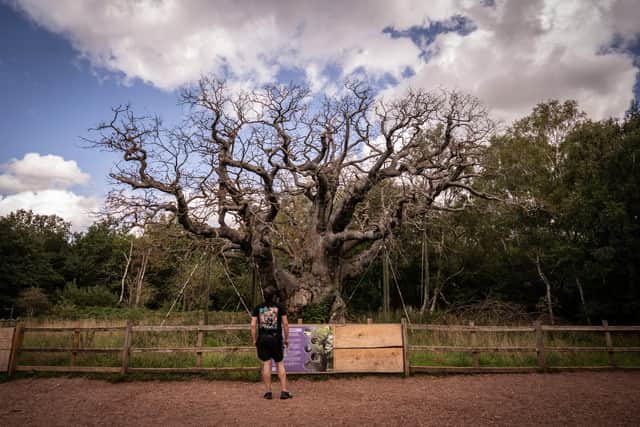
The Major Oak in Sherwood Forest, , is thought to be 1,000 years old and has survived fires, winds, snowstorms - and once gave shelter to the outlaw Robin Hood, as legend has it - during its long life.
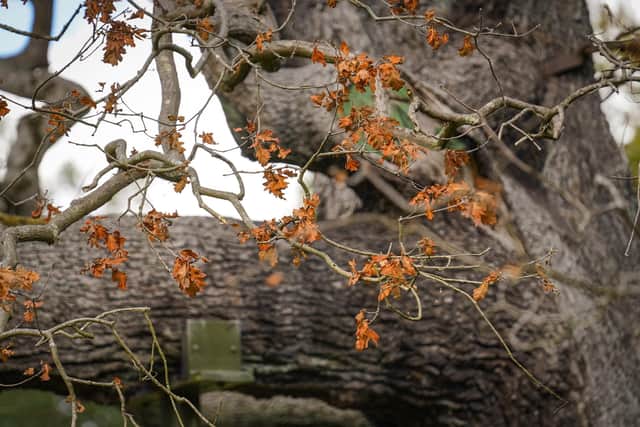
But this year, concern for the tree's health rose after recent images showed the oak without a single green leaf - well ahead of normal shedding period.
It comes after trees and plants across the UK battle their third consecutive summer of prolonged drought during their growing season - average temperature of 16.2 °C - which experts say has pushed us into a 'false autumn'.

This is where trees and plants shed their leaves and fruit in a bid to survive due to extreme summer conditions.
The Royal Society for the Protection of Birds charity (RSPB) has been working closely with some of the UK’s best tree and soil specialists to help the Major Oak, as this year's extended drought takes its toll.
But they claim that efforts to 'save' the mighty oak is becoming a "significant challenge" with more extreme weather.
Chloe Ryder, operations manager at RSPB, said: “This year, once again, its leaf coverage demonstrates the massive stress that the tree is under.
"A tree this old, with such a complex history, faces gargantuan challenges as it is, which are being continually exacerbated by very hot and very dry summers.”
The charity aims to keep the forest's ancient oaks alive for as long as possible.
But the Met Office's warning that extreme weather was the "new normal" continues to have concerning ramifications for the future of thee nation's ancient trees.
Over the past 200 years, millions of visitors from all over the world have travelled to Sherwood Forest to admire the Major Oak.
But its popularity has contributed to compaction of the sandy acidic soil around its base, caused by decades of people walking – or even riding and driving – up to the tree until the installation of a fence in the mid-1970s.
The fence helped to ease pressure on the soil, but not the ongoing threat to its health due to the compaction, which has continued to restrict the flow of water, oxygen, and the availability of nutrients to the tree’s roots.
In addition, recent ‘ground-truthing’ of a subterranean root radar survey, which had estimated the extent of tree’s root system, has discovered the alarming reality of a much-reduced network of roots in poor condition.
Chloe Ryder, added: “We can already see that climate change is having a devastating effect on the natural world, and the warning from the Met Office that extreme weather is the ‘new normal’ for the UK gives us real cause for concern.
“The Major Oak has experienced three consecutive summers with prolonged periods of drought during its growing season, and unprecedented high temperatures of 40°C in 2022.”