
Year six children in Ashfield have healthier teeth than average in England


Year six children in Ashfield have healthier teeth than the average across England, recent estimates show.
Fresh analysis by The Food Foundation reveals ‘shocking’ health and dietary inequalities across England, with dental decay, obesity, diabetes and shorter life expectancy afflicting deprived constituencies.
The charity called on policy makers to target action where it is needed most, after Prime Minister Sir Keir Starmer pledged ‘to create the healthiest and happiest generation of children ever’ ahead of last year's General Election.
Funded by the Nuffield Foundation, using Government data and calculated by the London School of Hygiene and Tropical Medicine, The Food Foundation's new Health and Diet Inequalities Dashboard includes updated estimates of the health status of people across the country.
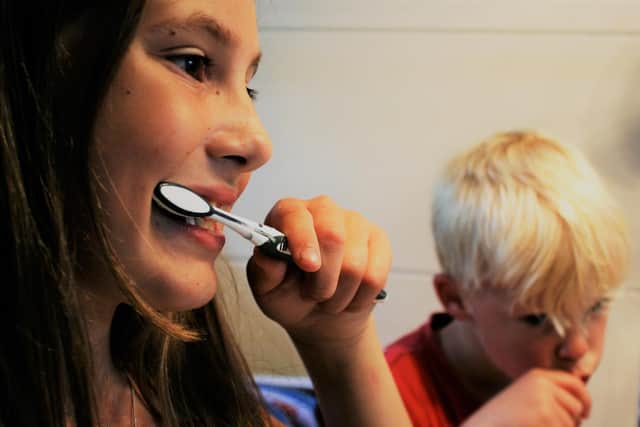
It estimates just 7.64 per cent of year six children in Ashfield had tooth decay in 2022, while the average stood at 10.6 per cent in England.
The new tool also reveals deprived constituencies are the worst affected by poor dietary habits, and highlights significant regional divides.
It shows the north east is the worst affected region for six out of nine metrics, while the south east performed best overall.
The charity said understanding these geographical disparities is ‘key’ for the Government to meet its manifesto commitments, and called for policy makers to target action where it is needed most in the Government’s upcoming Food Strategy and Child Poverty Strategy.
Dr Hannah Brinsden, head of policy and advocacy at The Food Foundation said the new health and diet inequalities dashboard highlights ‘stark inequalities’ across the country, as well as ‘the detrimental impact that our food system is having on our health’.
She added: "The Government’s Food Strategy is a huge opportunity to reduce these regional inequalities and improve the healthiness of our nation.
"By focusing on national action to improve our food environments, alongside harnessing the power of local leadership, bringing together local businesses, community enterprises and producers, we can ensure that everyone has access to more nutritious, affordable food, no matter where they live."
Paul McDonald, chief campaigns officer at Health Equals, said: "Food is an essential building block of good health that we should all have access to, no matter who we are or where we live.
"If the Government is serious about tackling health inequalities, they need to take urgent action on food insecurity, so we can make health equal across the nation."
Prof Sir Michael Marmot, director, UCL Institute of Health Equity, UCL Dept of Epidemiology and Public Health, said: "Too many people in Britain have food insecurity and too many people cannot access healthy food.
"The result is stark inequalities in health related to nutrition.
"A strategy to achieve greater health equity has to include access to affordable, nutritious and attractive food."
A Department of Health and Social Care spokesperson said: "Through our Plan for Change, we will limit kids’ access to fast food and crack down on junk food advertising.
"We are launching a world-first partnership with food retailers and manufacturers to help families make healthier choices and reforming the soft drinks industry levy to ensure it continues to work effectively to reduce sugar consumption.
"We are also rolling out supervised tooth brushing for three-to-five-year-olds in the most deprived communities and have already begun the rollout of 700,000 extra urgent dental appointments."