
Photographer snaps Supermoon over Ashfield
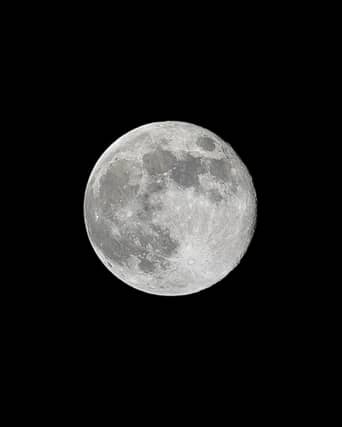

The first of three Supermoons in 2026, known as the Wolf Moon was photographed near to Sutton Observatory by Ashfield Photographer Paul Horton at 22.37pm on January 3rd.
It filled the skies over Ashfield with bright moonlight and added into the mix shooting stars were sighted too in a stunning stargazing spectacle.
on Saturday night, the clarity of it was 99.99 per cent making it visible to see even the lunar surface and its craters on the photos.
The full Moon marked the first of three so-called supermoons in 2026 – where our lunar neighbour appears bigger than usual.
A supermoon is a special type of full Moon event where it looms especially large in the sky.
The Moon itself isn’t growing – it’s just closer to Earth.
“The distance between the Moon and the Earth varies, because the Earth is not right at the centre of the Moon’s orbit and the Moon’s orbit is not a circle (it’s an ellipse),” the Royal Greenwich Observatory explained.
“The moment when the Moon is closest to the Earth is called a lunar perigee. When the Moon is furthest away it is known as a lunar apogee.”
If the perigee is happening close to a full Moon then that’s what astronomers call a supermoon.
The opposite effect is a micromoon, which is obviously less exciting as a visual spectacle.
In any case, a supermoon is a good opportunity to go out and stare at our closest space neighbour.
This year, we’re expecting three supermoons. They’re expected to take place on:
- January 3, 2026
- November 24, 2026
- December 24, 2026