
Death at Sea: Notts funeral director launches awareness campaign for cruise goers
With peak Caribbean cruise season approaching and as all-inclusive cruises continue to grow in popularity, the East Midlands’ largest independent family funeral service is warning holidaymakers about the importance of travel insurance and ‘worst case scenario’ planning for trips at sea.
While Netflix recently released a ‘top watched’ documentary about a young woman who disappeared on a Caribbean cruise, and with the long-anticipated Disney Destiny soon to set sail on its maiden voyage, cruises are on the news agenda more than ever before.
Against this backdrop, A.W. Lymn The Family Funeral Service, which was founded in Nottingham in 1907 and has grown to become the city and county’s largest independent funeral directors, operating 25 branches across the region, has warned that those setting sail around the world need to be prepared – namely with the right insurance and also to understand the protocols for what to do if a death occurs at sea.
“Death at sea - or indeed a death during any holiday abroad - is a subject that few want to think about, but it is very important to be informed if you’re planning a cruise ship holiday,” says Jackie Lymn Rose, fourth-generation Lymn and Director at A.W. Lymn. “Firstly, getting the right travel insurance policy is vitally important. Standard travel insurance policies don’t always provide protection for incidents unique to cruises, such as missed port departures, cabin confinement due to illness, or itinerary changes caused by weather or mechanical issues. A suitable cruise travel insurance policy should also cover medical treatment and emergency evacuation at sea, cancellation or curtailment, and lost or delayed baggage.
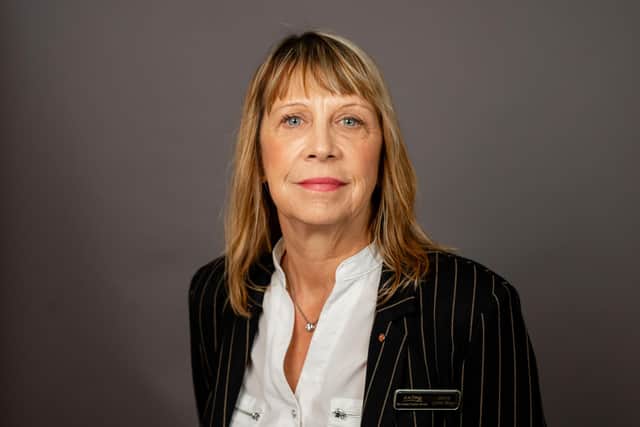

“Then it is the practicalities to be aware of. No one expects to lose a loved one while on holiday, and if the death happens at sea the situation can be more complicated than if it happens simply abroad in say Spain.”
If a death occurs on board a ship, whether in international waters or while docked, cruise lines typically have protocols in place. The location of the ship at the time of death and where the ship is registered will determine to whom and how an issue is reported. Most ships have a designated space - usually a temperature controlled environment- for preserving the deceased until they can be disembarked, which is often at the next port. Sometimes deceased may be airlifted from the ship.
While it is technically possible to arrange a burial at sea, it’s rare and strictly regulated.
Jackie added: “A burial at sea must meet stringent maritime and legal conditions. Often, it's more practical and respectful to repatriate the body home.” However, complexities can arise based on where the ship is registered, the current or next port of call, and local laws. This is where professional guidance becomes essential.
A.W. Lymn’s awareness campaign for those booking cruises is in response to a couple of key factors; firstly the average age of a cruise passenger being 55 years old, according to the Cruise Lines International Association’s (CLIA) State of the Cruise Industry report as well as the rapid rise in cruise passenger numbers. The global cruise sector is expected to attract 37.4 million ocean-going passengers in 2025, up 9% on the previous year, according to the CLIA Report. By 2028, that figure is forecast to reach 41.9 million.
“It is mandatory to have the appropriate travel insurance in place before embarking on a cruise,” Jackie said. “And this is one reason why. Repatriation costs can be significant and, without insurance, families may face unforeseen financial burdens and time delay compounding the emotional fact of losing someone in such circumstances.”
A.W. Lymn handles dozens of repatriations each year. When a death occurs abroad and the decision is made to return the deceased to England, the process can be emotionally and administratively challenging. Language barriers, cultural differences, and foreign bureaucracy can all complicate matters. “Having an experienced, compassionate funeral director at the end of the phone back home makes all the difference,” Jackie adds. “We manage these delicate situations with care and professionalism so families can focus on grieving rather than paperwork.”
A.W. Lymn was established in Nottingham in 1907 and has grown to become the city and county’s largest independent funeral directors, operating 25 branches across the region. Having recently acquired M.A. Mills and expanded into Leicestershire, it continues to grow its reach and network of talented funeral directors supporting the bereaved.